
"The Birth of a Nation:" Not Worth Paying For
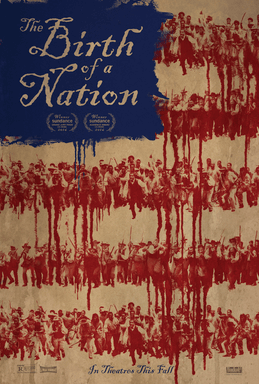
Content warning: discussion of rape, suicide, slavery.This past Wednesday, Ivy Film Festival hosted a free advance screening of Nate Parker's The Birth of a Nation. The movie, which reclaims and repurposes the title of a 1915 KKK propaganda film, is about preacher and slave Nat Turner, and the rebellion he led in Southampton County, Virginia, in the summer of 1831.The Birth of a Nation has been shrouded in controversy because Nate Parker, who wrote, produced, directed, and starred in the film, was accused but acquitted of raping one of his classmates when he was a sophomore at Penn State. His college roommate, Jean McGianni Celestin, a co-writer of The Birth of a Nation, was also accused and convicted of the same crime, although his initial conviction was overturned years later. Read this article for all the details, but in sum: The victim was extremely drunk, essentially passed out, while Parker was attacking her. He then waved Celestin into their room to join him. She didn't even know Celestin's name and awoke briefly to find him on top of her after Parker climbed off of her. There is a witness to many of the events of the rape because the door to the dorm was open: a man named Tamerlane Kangas, friend to Parker and Celestin, saw both Parker attacking the victim and his invitation to Celestin to join him. The victim killed herself four years ago after repeated suicide attempts. Parker and Celestin both appear to be guilty. They, however, say that her claims were false and the sex was consensual.Parker certainly isn't handling the situation well. As Professor Hamlin joked in the faculty panel following the movie, "He should fire his PR rep because he has said so many problematic things about the rape." For example, he has said in the past, "If I had it my way, it would never be brought up again. It's taken six years of my life to get past it," and, recently, "I stand here, a 36-year-old man, 17 years removed from one of the most painful … [he wells up at the memory] moments in my life." These statements, which imply that Parker somehow deserves pity, have not been sitting well with audiences.Knowing that, it's hard to watch The Birth of a Nation without feeling biased against Nate Parker (and his co-writer, Jean Celestin). Knowing that, it's hard to watch the two rapes in the movie—which did not actually happen in real life—without being at least a little offended at their fabrication by two probable rapists. The two rapes are used as plot devices; they push Nat Turner over the edge and are the immediate justification for Nat's rebellion. The sister of Parker's victim said in a recent interview, "I find it creepy and perverse that Parker and Celestin would put a fictional rape at the center of their film, and that Parker would portray himself as a hero avenging that rape. Given what happened to my sister, and how no one was held accountable for it, I find this invention self-serving and sinister, and I take it as a cruel insult to my sister’s memory." You can't say she's wrong. That is creepy and sinister.However, if it were possible to fully separate art from artist or if there never had been any scandal surrounding The Birth of a Nation, I still would not highly recommend it. It was by no means awful; it just wasn't great. I would not have been happy if I had paid $14 to see it in theaters. If it's free on Netflix someday and you've already seen 12 Years a Slave and Roots, then go ahead and watch it. But I personally don't think it is worth paying for.The film opens with a scene of young Nat Turner being declared a leader and a prophet, because he has three strange birthmarks. They represent wisdom, courage, and vision, and therefore, as a religious leader amongst the slaves declares, "We should listen to him."Nat's owners teach him to read (but only let him touch the Bible, not the books that are "for white folks only") and his owner begins to rent out his sermons to neighboring plantation owners, who want their slaves to be more God-fearing blindly obedient.The Birth of a Nation is certainly visually stunning, with beautiful images of cotton fields and of candles flickering at night. Nate Parker himself gives a fantastic performance. The emotion he puts into many of Nat's sermons definitely gave me chills and Parker and Celestin's choices of which bible verses to include in the film were impeccable.Many of the artistic choices were definitely questionable. If you ever watch it, let me know what you think of the angel (you'll know which angel I mean) and of the Saving Private Ryan-esque slow stab. I found them cheesy, but I'd love to hear someone else's opinion. The music was also too dramatic and loud at times when I thought silence would've been much more powerful (for example, in the extremely violent scenes of rebellion and hanging).In the panel after the movie led by four Brown professors (Francoise Hamlin, whom I have already mentioned, Brian Meeks, Emily Owens, and Andre Willis), they all expressed varying levels of praise and criticism for the movie. I think that is the prevailing reaction to the film: generally positive, but taking serious issue with certain aspects of it. Professor Hamlin said that she finds it hard or impossible to separate art from artist, particularly in this case. Professor Owens found it too overly masculine, especially considering how big a role women and children played in the actual rebellion. She also noted the fact that female characters hardly even have any lines in the whole film. Even about the sexual violence they experienced. And all of the women in Nat's life just spoke to validate his actions, constantly telling him how proud they were of him. It's annoying that Parker and Celestin didn't try to write in any character develop for any of the female characters.In general, The Birth of a Nation was just okay and definitely begs the question of whether it is possible to separate art from artist.Image via.