
SATC: Background Noises
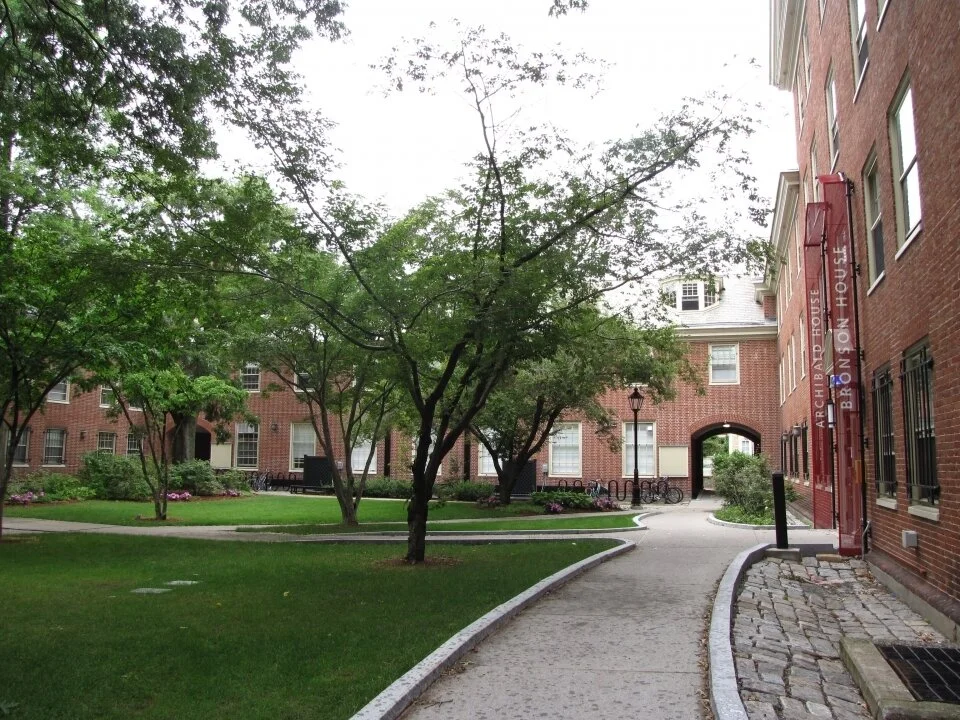
Every morning at approximately 7:30am, my roommate and I are lovingly awakened by the hammering and/or shouting of construction. As a morning person, that doesn’t pose too much of a problem for me. Neither does my roommate’s alarm, which goes off about every five minutes, only to be snoozed immediately. It feels strange to me when her alarm doesn’t go off on weekends, as if my morning is missing something. I wonder if I will feel the same when the construction wraps up (as much as I really, really hope it does).
I’ve gotten used to the sounds of my new room, and it makes me reconsider the ones of my room last year, of my house in Los Angeles. Keeney Quad is notorious for loud nights, but I mostly remember the sound of rain pattering on the roof as I fell asleep. I remember how clearly I could hear doors opening up and down the hall, and the sounds of someone’s music pounding through their walls.
My room at home is right on the living room, where my family spends a lot of time watching TV, relaxing, eating (and being loud). The door to my room also has a window in it which, let me tell you, let's sound fully travel through glass. When I was in high school, this was a problem because I was trying to study and was always distracted. Or, in my Goth tween-age angst, I was simply annoyed by everything and couldn’t stand the loud clomp-ing of my brother’s footsteps. (I have never known anyone who walks so loudly.)
But when I got to Brown, I realized how comfortable and necessary that background noise had become. Now, I passionately refuse to study in the campus libraries, and will only cross their thresholds when I am forced to print something. They’re just too quiet, too tense. I like studying on the Main Green (when it’s as nice as it is right now), or in the Archaeology building, where couches and books line the walls in a comforting embrace. While this has resulted in quite a lot of money lost to Coffee Exchange, it has also allowed me to feel more comfortable on campus. I enjoy studying in places that feel lived in and cared for, and these places often come with some form of white noise.
I have strong associations with sounds. As I have grown used to the sounds that populate Brown’s campus, I have been able to relax more into that background of noise and activity. Other people respond to different things, but I think home is a sensory feeling for most. We settle into the things we don’t necessarily notice, the ambient sounds, smells, sights.
I recently decided to interrogate a new transfer friend. With good intention, I asked how he’s liked Brown so far. Having been asked the same question as a first-year, I can imagine it is only more complicated as a transfer (I’m sorry, friend). “It’s hard to tell,” he told me, “the reasons I transferred were immediately better, but that feeling of familiarity takes a while.”
This isn’t a novel discovery or an extraordinary revelation. I think people know this, that it takes time to feel comfortable in a place. What’s interesting to me is how much the background impacts what I will call the foreground for the sake of this metaphor. The things in the background are distractions, they are filler words and ensemble casts. They are not the singular, bounded events or the immediate surroundings that we pay so much attention to, but they are important. After all, what would a conversation be without the fillers, the uhs, likes, and y’knows of casual speech. It would feel formal, anxious, a bit stilted. Uncomfortable.
That’s exactly what it feels like to live somewhere before growing accustomed to the background. It’s hard at first, when all your attention is focused on what’s in front of you. Your senses are exhausted from everything that’s so new. But when you start to fill in the space, the whole picture comes together.