
What's Your Deal?: Charlotte Silverman talks menstrual health, film production, and attending the Oscars
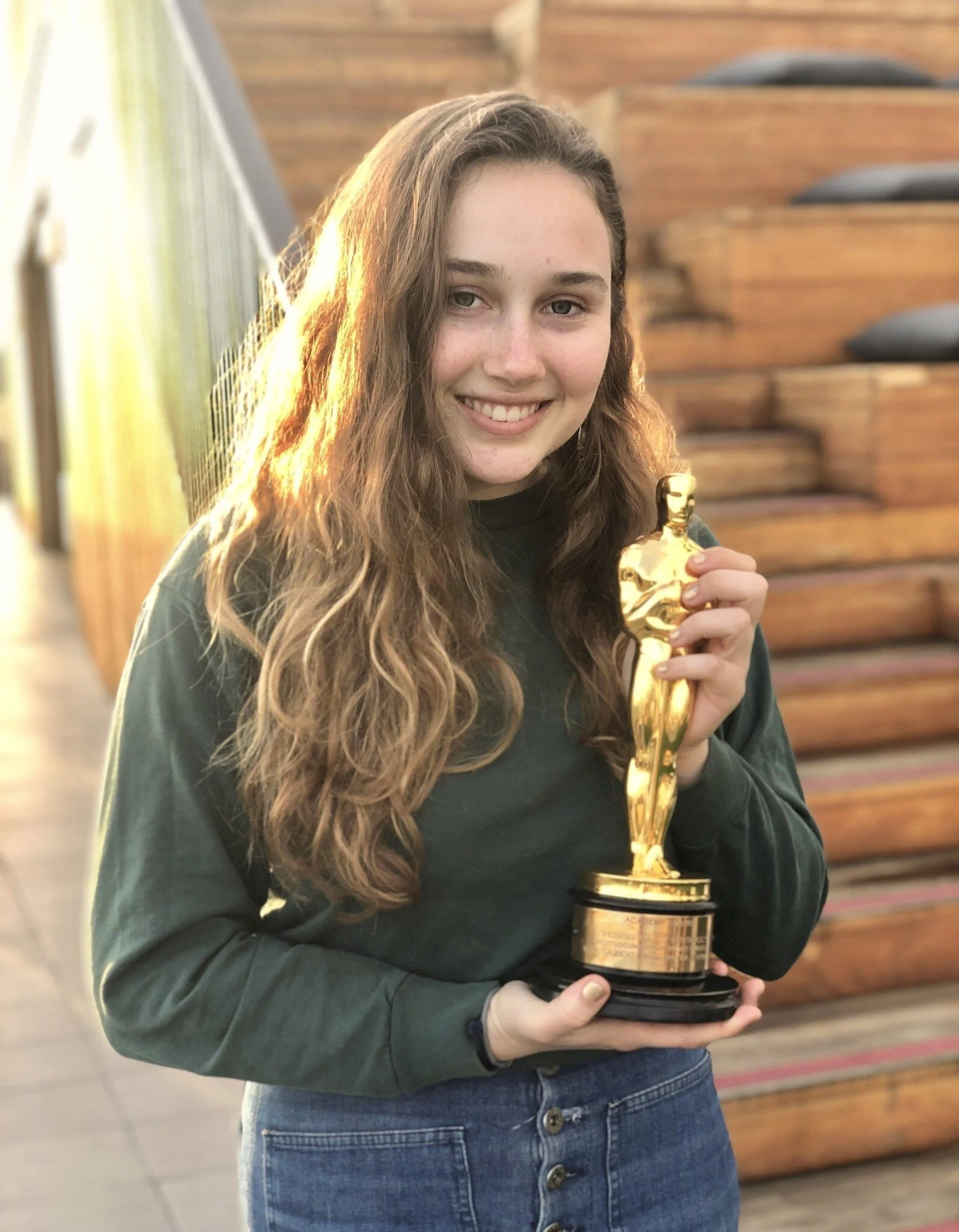
Charlotte Silverman is a first-year student and founding member of The Pad Project, a nonprofit aimed at increasing global access to menstrual health products and ensuring that no girl will ever have to miss school because of her period. Silverman is also an executive producer of the Oscar-winning Period. End of Sentence., a 26-minute film that documents the installment of a pad machine in a rural village outside of Delhi, India.Blog sat down with Charlotte to talk about the importance of menstrual health, the complex question of who should get credit when a documentary like this one wins a high-profile award, and, of course, what it’s like to attend the Oscars – commercial breaks and all. Blog: To start, tell me about how you got involved with The Pad Project and this documentary. Charlotte Silverman: I started this project with four other girls in high school and we got involved because we were all part of a student group called Girls Learn International that was focused on girls’ education rights globally. Through that, we got partnered with an organization called Action India in Delhi that does a lot of workshops on things like menstrual health, sexual health, reproductive health, and things like that with girls from within the city and outside the city. We already had this ongoing partnership with them, and simultaneously we had been working on initiatives in our own community – doing pad drives and tampon drives for local women's shelters, and things like that. Then some of the older girls in Girls Learn International went to the United Nations Commission on the Status of Women, and while they were there, they heard personal accounts of women who had been affected by not having access to menstrual products.Obviously, this is something that's happening in the U.S. too, but since we had this partnership with Action India, we kind of asked them what their experiences were with that. They told us about the pad machine that had been recently taking off and about Muruganantham, who invented the machine. We basically came in from the other side as supporters of whatever they wanted to do, so they were fully in control of this kind of revolution, which is always one thing I try to articulate. Together, we kind of established this idea of raising money and installing a pad machine, and we started fundraising in 2016. And then we decided that raising money to make a documentary about it was probably more worthwhile than installing three pad machines – because if we could reach a greater audience, we could not only improve access in this one community, but we could also establish a global conversation and change how people are thinking about access to menstrual products and girls’ education. And we thought that just having this be something that people talked about would be equally as important. Also, we knew that we had a platform, being in Los Angeles, and we thought that the story of this community was super inspiring and what they do is super inspiring, so we wanted to help share that story.What exactly did your role as an executive producer look like? As a founder of The Pad Project, I was an executive producer in that I was helping overlook the film the entire time, because the movie is kind of a subset of the project. So we were overseeing decisions about, like, who is in it, for example. At some point there was a possibility of it being about the partnership, so we would have been in it along with Action India. And we decided that we didn't want that – we wanted it to be about a very specific movement in one area. And that decision was made in contact with the activists on the ground as well. Also, we had hundreds of hours of footage and it’s a 25-minute movie, so as producers we were also deciding what kinds of themes we wanted to have included in the movie. And then a lot of what I'm particularly interested in and my role in this was maintaining contact with Action India and making sure that they had an equal say in what was happening in the movie and that it was their project, so that was what I held myself responsible for. And I guess the last thing is funding, that’s also a big part of it – a lot of reaching out to companies and sponsors and individual people asking if they would be interested in funding the project.What was your favorite part about working on the film? And what was the hardest or most surprising aspect?I think my favorite part and also the hardest part was going to India… I think having a collaborative project through Skype is really difficult and it took a lot of coordination and a lot of determination, but finally going and meeting as a whole group was incredible. The first time we showed the film and watched it all together, everyone was giggling because they saw themselves on it… it was fun. And everyone was crying... it was an incredible trip.How long were you there? Two weeks. So we spent some time at the unit doing business plans, having meetings about the future of the pad machine with the people that work on it, finance stuff and all that. And then we did some time meeting with the other Girls Learn International groups in the Delhi offices. The village where the machine is installed is three hours outside of Delhi, so when we were in Delhi, we were at Action India meeting with other girls who are not a part of that project specifically, but who do GLI and have done menstrual health workshops through Action India and things like that. At one point a bunch of alumni from their GLI chapter put on a play about consent for us, and that was incredible. They were so far ahead of us in the consent conversation and that was cool to see. We were both learning from each other and yeah, it was a packed trip and emotionally, like, so intense, but so incredible. Yeah, and I think with all of these projects, there are some people… like, a lot of the men in the area were very anti this whole thing happening. There were some people at our school that were like, you shouldn't be doing this. There are always people. And that was always difficult to not listen to, but rather to keep going with what you know is going to be a positive thing for the actual community that it's affecting. So that was something that I had to keep remembering. Every time I talked to the activists there I was like, Oh yeah, this is why we're doing that.Can you describe the response the film has gotten so far?Yeah, so we’ve gotten a big response from people in communities like Kathikhera, where the pad machine was installed – people who have grown up with a similar issue who are like, “My story is out there, I'm so glad.” Today somebody reached out from Peru and was like, “My community needs one of these machines – we don’t have any conversations, we don’t have any access.” And those messages are really hard to respond to because the reason that what we did worked in those specific areas was because we had a relationship with that community and we've had it for so many years, so it wasn't risky. But in an area where we have no connection, it's hard to respond and say we can do something. I guess now a lot of the work is pairing those people with the people who are reaching out and giving us funds and saying that they want to help. We have to figure out how to align that, because we don't want control over all of this. Each community has a very specific need and a very specific way that this would be implemented and we're not going to pretend to know each community. I think it's very important that the activists on the ground are the ones that are in control, so when it comes to installing new machines, we have to develop those partnerships.I saw that in another interview you said something about this being “just the beginning.” Was that statement referring to these next steps you’re talking about now?Yeah, now the work is expanding. I mean, we've always had the idea of, like, we want a global network of activists and we want people all over the world to be connected on this one issue if they feel inspired by it. When we did this film, we knew this wasn’t this India-specific issue. So yeah, it feels like it's the beginning – now is the real work.What do you think is the significance of the fact that this film – which is now a winner of one of the biggest film awards in our country – was spearheaded by young women, given that its content is so related to the empowerment of young women? I mean, I hope that this film is something that young women watch and feel empowered by, and I think that's one, a result of the story and two, also a result of the people behind the story. So I guess I'm hoping that other people will watch Sneha and Suman and see something that they relate to, and feel some desire to tell their own stories and connect to other women through education and empowerment and talking about things that we’re told not to talk about. I think that's another big part of it for me – the reason that I was so touched by this specific work is that it’s not only a group of women, but they're creating work for themselves in something that is traditionally, globally something that you're not even supposed to talk about. To create an entire life out of it is incredible to me. So I’m hoping other people feel the same about that. [Editor’s Note: As the film documents, the pad machine both increases access to menstrual products in the area and provides steady incomes for the women who work with it.]There's been a lot of dialogue since the film actually won an Oscar about how surprising or amazing it is that a film about menstruation won. Do you think that the win bodes well for the future of the menstrual equality movement or do you think it's is less of a milestone for the country as a whole and more related to Hollywood's liberal skew? What do you think the critical success of the film really means? I think it varies by place, honestly, and by community. And I think opening the conversation about menstrual health and about women's health specifically is something difficult to do everywhere. I don't know, I'm thinking about the responses we've gotten from different places and how those vary... I mean, some people are saying, “Wow, I've never heard people talk about this before. I can't believe someone said the word ‘period.’” And some people are like, “Wow, this is so wonderful and I want to help.” So if you're coming from a position where you're very privileged and have these conversations all the time – which a lot of fellow students have done – I really appreciate that support. But it's a different response from those of the people who are like, “This is happening where I live, too. I can't believe someone's finally talking about it.” So I think making connections between those people is really important.Going off of that, I think it's amazing that you partnered with a group in India that had already been doing a lot of on-the-ground work. I was just wondering, has the film been released there as well? And on Netflix, like in the U.S., or what? What was the response there?Yeah, so Netflix is the main distributor. Since the Oscars, we definitely had more people there watching than before – no doubt the award helped publicize it. I don't know the exact numbers, but there was an incredible response there, so that means that people are seeing it. Sneha and Suman had, like, hundreds of people at the airport giving them flowers and greeting them. So the response there has been amazing as well. This is something you touched on right in the beginning, but obviously there are two different approaches to raising awareness about this issue of menstrual equality – one being the nonprofit itself and then the second being the film. Could you talk a little bit more about how you think these two approaches function together and rely on one another, or exist in contrast or conflict with one another? Do you think one's more important than the other?Yeah, so I don't think one is more important, but I do think that having them work together is the reason that this project is successful. I think that Action India does incredible work without us and, realistically, they don't need us. But we all thought together that film is one of the most powerful tools to send a message and inspire people and get people involved with a movement. So that's why we chose to do a film rather than trying to spread awareness in another way – we thought that this was the way we would reach most people and also the most diverse group of people. We knew that as an L.A.-based school, we had a very privileged platform and that it made sense to use it in a way that shines light on stories that aren't usually told in Hollywood. So yeah, I think both sides were equally necessary, but we also tried really hard to not make it a two-sided thing, where there were the film people and then there were the activists.Yeah, I think the fact that you and the other people from the Pad Project were so involved with the film shows that.Yeah, we definitely wanted it to be a collaborative effort. Mainly we wanted to make sure that it wasn't something that was about us – you know, we wanted to move past the surface level of, like, “We need to help these people,” or victimizing anybody, or even just sending a bunch of pads and hoping that they’d do something with it. We wanted it to be a collaborative effort and something that really showed the real activists on the ground doing the work, and how important it is.Do you think that the fact that this film won an Oscar dilutes that? Because obviously, it's kind of giving more recognition to the people behind the film. And it's great because the issue is getting so much more attention, but…Yes, so that’s a huge – I have plenty to say about that. But one, I will say that in India, it’s members of Action India and the girls in the film who are doing all the interviews, so they're in all the major papers and the project is much more accurately depicted because they're physically there and able to do those interviews. Here, we have to relay the information of what they're doing. And I think that makes it difficult because I don't think people see how collaborative the project was in the media. And yeah, I think the power dynamics are not perfect at all. I think that we shouldn't be getting this much attention on this side of the project. I do think, though, that a lot of people end up watching the film because of the attention and the awards – people are hearing this story because of the publicity on this side. So I think there are pros and cons, but I will say that, yeah, it's definitely not a perfect project in any way and there are inherently power dynamics that I wish were not present. But we actively tried to prevent that from undermining the project itself.Yeah, it seems like you guys are trying to be very thoughtful about all of that, which is really cool. Okay, switching gears a little bit – The Oscars.Yes.The Oscars are a crazy place. [laughs]When did you learn that you would be going?We found out the end of January, early February, something like that. I think it took me until I was actually there to process.And how did you find out? It's a phone call, and we were all on a conference call. We were all, like, jumping around and screaming. [laughs] And then it was just that times a hundred at the Oscars because we had the full team there and we were all jumping in the audience, screaming… it was so fun. And it was just cool to have people recognize Sneha as the star of the film and ask to take photos and, you know, people were saying that they were so inspired by her story. To me, that was the best part. It was cool to see that intertwined with… it’s a very showy place. It’s kind of freaky, but I don’t know, it was really cool to have a whole team there. And Netflix threw an afterparty for us and Roma because we were their two winners and it was so fun. They gave us all dark chocolate Oscars. [laughs] No, anyways, yeah, it was fun. It felt like a celebration of the work that everyone had done, and that was incredible. What else about the Oscars… it was fun to get ready, that was like a whole day. [laughs]Yeah, walk me through the whole day!Okay, so we had makeup artists and hair people, like 8 of them, everywhere in my house – my house is not that big, so we were all in different corners. [laughs] And Sneha and Suman had never had that done before, so that was fun. It was an adventure for all of us. [laughs] And then getting dressed, of course we had wardrobe malfunctions – something broke and then we had to stitch it up really quickly and all of that. And then Netflix sent us big cars to drive to the event and things like that. It was wild. But it was fun. Everyone ended up having a good time. We were probably the most colorfully dressed group there. [laughs] Everyone was wearing sparkles. Once you were at the Oscars, were there any weird, funny things that you learned about in terms of what actually happens there?Okay, so commercial breaks – nothing happens! They don't even play music! You just sit there in silence for like three minutes! I was so surprised. Like, they just cut it off for a second and then everyone kind of starts chatting and then they're like, “Okay, 10 seconds.” And then they're like, “Okay, five seconds, applause please.” And then everyone clapsI never thought about the fact that everyone's always clapping when it cuts back from commercials! That’s so funny.Yeah, they tell you to do that. [laughs] It was so strange.Did you have any funny celebrity sightings or interactions?I held the door open for Emma Stone. That felt good. [laughs] My friend and I just sat in the bathroom on the sinks for a while, just people watching – that was awesome. [laughs] Lupita Nyong'o had, like, the best dress I'd ever seen.I believe it. Awkwafina announced our award and was wearing a sparkly suit and I was also wearing a sparkly suit, so we were like, [gestures in camaraderie with an imaginary Awkwafina]. [laughs] Yeah, it was a lot of little interactions. At the after party, Alfonso Cuarón – he’s the director of Roma – he had, like, a full posse protecting him from anybody asking to hang out with him. [laughs]Honestly, that doesn't sound very fun. The afterparty or him?Him!Yeah, I know! I would want to interact with people! Exactly. No, it’s a great time. Yeah, that was the night and then my teacher made that announcement with the director onstage and that was cool. That was just cool because it got such a good response – a lot of the women in the audience – they projected their faces, like, Melissa McCarthy and random people, and they were like, yeah! They were so excited to hear our tagline. [Editor’s Note: the film’s tagline is “A period should end a sentence, not a girl’s education.]It's a great line! Okay, so we’ve talked about like the general positive reception, but were there any funny reactions from friends or family when they found out that the project you worked on had won?My parents were at separate Oscars-watching parties where everyone was cheering, and that was cool to know. I don't know. I honestly felt most celebratory with the other people in the group because like, the project's been so many years that it just felt like a big celebration for our work… but also immediately we all knew that this meant like years more of it [laughs] which is awesome. It was validating and yeah, very exciting. It's cool now to share it with the Brown community. I didn't really ever talk about it here before this, but it's cool because a lot of people have done similar work or advocated for free menstrual products in our bathrooms and things like that. It's cool to find intersections.Finally, looking forward, do you think that this issue is going to guide the work that you'll be doing for the next several years or even your life?Yeah. I mean, I plan on staying on this project – now I’ll be on the board of The Pad Project. And you can't really stop now. I’m completely committed to this one community and also to spreading awareness and increasing access to health education and to menstrual health education. Yeah, I don't really see myself dropping off of this issue at all. Now that we've seen it successfully implemented with one specific community, I think the work is about seeing how that can be done in different communities. And I'm very interested in working within the U.S. in low income and homeless populations and seeing how access to menstrual products is similar or different. So I'm hoping now to just build more community organization connections and see how it can work here too, which I think is something people are definitely interested in, with the project overall – just making it a more global movement.And do you see yourself continuing to work on film production in the future, either on another film related to this issue or on something totally different?I think this has definitely shown me how much film can make people feel connected to an issue. I think that the way that it's spread awareness about this and spread conversation… I don't know how else that would have happened really. And I’m definitely interested in that. I always thought I wanted to be a director, but I don't know… now I'm pretty committed to the nonprofit end of it. So I don't know. I think I have to figure out how to make those two intersect. [laughs] Because working just on the nonprofit was tons of work, so to imagine doing that and being fully in control of the actual production and the camera and everything… that'd be a lot. [laughs] It would be fun. Challenging.
Sneha, Charlotte Silverman, Ajeya Deep, and Sulekha
Period. End of Sentence. can be viewed on Netflix.This interview has been edited for length and clarity. Images via and via Charlotte Silverman '22.