
Actress, Activist Diane Guerrero Visits Brown
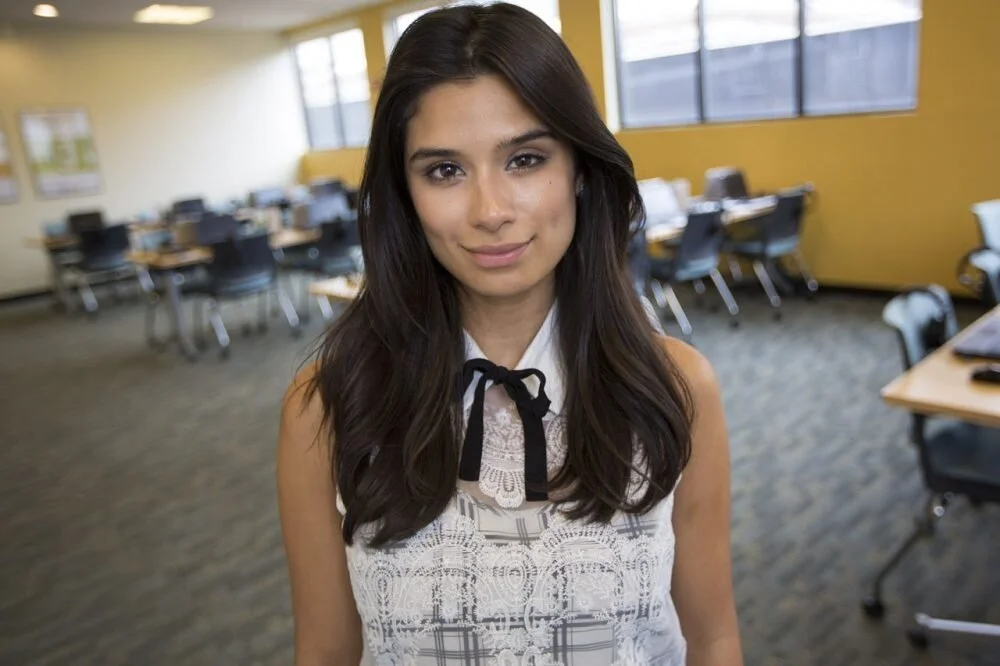
This past Tuesday evening, actress, activist, author, and winged eyeliner aficionado Diane Guerrero stepped onto the Salomon Center stage to cheers from a sold-out audience of excited Brown students.After Senior Daniella Balarezo introduced her, Guerrero made some short remarks before sitting down to a discussion that touched on everything from her new show Superior Donuts (CBS on Monday at 9pm, she would want you to know) to her desire for more diverse representation on screen. Guerrero, a staunch advocate for immigrants’ rights and immigration reform, who recently published the book In the Country We Love: My Family Divided, also spoke about how the experience of deportation shaped her life.Born in New Jersey but raised in Boston, she is a bona fide celebrity, with almost two million followers on Instagram and a role on one of Netflix’s hottest shows, Orange is the New Black. But her path to stardom was not easy. Guerrero's parents and brother were undocumented during their time in the U.S. When she was just 14, she came home from school one afternoon to find that, without warning, her parents had been detained and would be deported to Colombia, their country of origin. This caused emotional tumult for Guerrero, who engaged in what she described as “self-sabotaging” behaviors, which ranged “from running away to [contemplating] suicide to trying to move in with a white family and disguising herself as a white person.”After finishing high school in spite of her circumstances, she attended Regis College in Weston, Massachusetts. She had always wanted to pursue a career in the performing arts but was worried that, given the shortage of roles available for Latina actresses, she would not be able to make it in the industry. Eventually, she realized that this dream was bigger than herself."I really had no direction [after college]. I wanted to be an actor and also make social change...I didn't think I was good enough for either, certainly not smart enough...and I didn't see my story anywhere, and that made me feel like I didn't exist. I still had the desire to be an actor, but...I put [acting] aside and decided I wanted to help my community,” Guerrero said. She spent a year after college working in a legal office. “It wasn't until later that I realized that the best way to help my community was to follow my dreams and do my part to be seen and heard and to represent my community, which is what I hope I've done with the projects I have done and want to do in the future. As an actor it is my responsibility to tell the stories of those who are underrepresented." Throughout her time onstage, Guerrero underscored how important it is for Latinx people to see their stories in the media, engage with their history, and understand its value."Our history has been underrepresented...we're not just now experiencing a period of racial tension. Our country has systematically displaced and separated and enslaved people of color...but learning about our background will allow us unity and strength" she said.Going on, the told the audience, "Let's stop pretending that one Latino story is THE Latino story,” she added, “[and begin] understanding that all these stories are American stories and deserve to be told."Guerrero admitted that when she first began her journey towards telling her story, she was anxious and intimidated, saying “I still struggle with being ashamed [of my story] because I think most people don't get it, or the injustices of this immigration system...this whole part of me was something I didn't know if I could do, even though I desperately wanted to...and it's been a dream come true, because I wanted to be a part of the conversation."It was the "ugliness of our current political state" that spurred her into action, realizing the misconceptions that circulate about immigrants and their experiences and contributions to society."Every step in the food chain from planting the seeds to stocking the grocery store to washing your plates, it has been touched by immigrants," she said, emphasizing that this means "even if we are not first generation immigrants, immigration affect all of us."Keeping this in mind, "I try to use my experiences to heal, to connect with others, and further develop who I am as a human being,” she said. ”Sometimes when you have experiences like these you can use your trauma [in] all sorts of ways that impact your life negatively...to hurt yourself, sabotage yourself, hate yourself...so the way you heal from this is you take the experiences and know ‘I have experienced this, and I have survived.’”When asked what she advice she would give to young people whose families are dealing with similar issues regarding documentation, Guerrero paused. "Educate yourself, align yourself with people who are supportive, know your rights," she offered. "Even for those of you who can't vote, it's still important that you be heard...Just know that there's a whole community behind you, supporting you, even if it doesn't look that way in mainstream media."She went on, "Know who you are, know your history, know that...you're not less because your parents came from another country or because of the color of your skin... Life is a long road, there's plenty of chances to change, grow, learn new things, pick up new interests and go for them. Where you are now is not the same place you are going to be in 10, 15 years."Images via, via