
Meet Shawn Young, #FullDisclosure Organizer
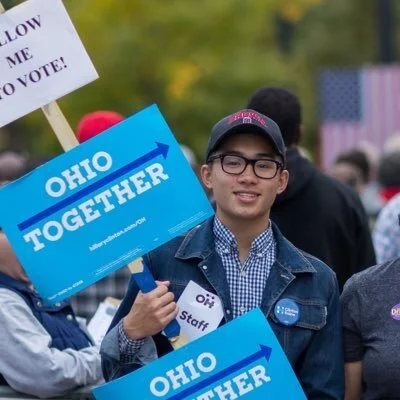
Following the recent vote to re-examine the use of legacy in Brown's admissions process, Blog sat down to talk to Shawn Young '19.5, a Public Policy concentrator and one of the campaign's lead organizers. Below, he explains what #FullDisclosure is, how it came to be, and what his hopes are for the future of the movement.
First, what is the #FullDisclosure movement?
#FullDisclosure is a grassroots movement aiming to reexamine the use of legacy preference in the admissions process. By asking our colleges and universities to release all disaggregated data and internally written policies related to legacy preference, our movement hopes to start a national conversation about educational opportunity.
Some context on the campaign: #FullDisclosure is part of a bundle of initiatives spearheaded by EdMobilizer, a student-run non-profit that addresses financial, social, and academic disparities in higher education. Most recently, the EdMobilizer team led #NoApologies, the campaign to eliminate the college application fee for first generation and low-income college students. And after seeing the success of #NoApologies, we believe that turning a critical eye to the college admissions process is a natural next step. As an organization, EdMobilizer has been working on #FullDisclosure for a few months now. However, the core of EdMobilizer's efforts lies with the student activists whose convictions drive the organization. For example, a group of highly dedicated Brown students have organized and mobilized students and administrators: Chelse Steele, Naveen Srinivasan, Amy Miao, Yuzuka Akasaka, Kristine Mar, Brian Elizalde, May Gao, Bilal Lafta, Christian Esquivel, Jackie Agustin, and William Zhou. In accordance with EdMobilizer’s mission of “changing the institution from the inside out,” these students are doing just that. Our campaign was so effective because our team came from different perspectives, educational and socioeconomic backgrounds, and walks of life!
How and why did you get involved with #FullDisclosure? How would you describe your role in the campaign?My background is in political organizing and I've been trying to find ways to leverage those experiences to make sure that Brown is the best place it can be. Neither of my parents attended college in the U.S., so making sure that higher education is as equitable and accessible as possible is a priority for me. When the EdMobilizer team reached out to me, I saw a unique opportunity to use organizing to have a positive impact on Brown.Originally, I was informally advising the EdMobilizer team, but I eventually got more integrated into the campaign and took on more responsibilities. Over time my role grew into a sort of campaign coordinator/organizer role. I make sure that as many as people as possible support #FullDisclosure. That meant getting signatures to put the referendum on the ballot, securing endorsements from candidates for UCS/UFB, and talking to people at the Ratty [and other public student spaces].
What do you think the Brown community can gain from this movement?The admissions process for all colleges/universities is inherently opaque. By getting as much information as possible about how legacy preference affects admission decisions, we can truly examine whether Brown is living up to the ideals outlined in its Mission Statement and the Diversity and Inclusion Action Plan (DIAP).What are you hoping to accomplish in the long term with this movement? Do you envision #FullDisclosure having an impact beyond Brown?
Our goal is to bring this movement to other schools. We want students all over the U.S. to have an honest discussion about legacy preference with their colleges/universities. Right now, there are student activists bringing #FullDisclosure to their schools. For example, students at Cornell and Duke currently have their own versions of #FullDisclosure in the works. I'm really excited to see where this movement takes us!Why is the conversation surrounding legacy admissions an important one to you?
I first became concerned with legacy preference when I learned about its history and the value that it brings to universities. First, legacy preference finds its roots in discrimination; it was originally used to prevent Jewish students from matriculating to elite universities. Second, there is no evidence that legacy preference brings financial value to universities. One study of the top 100 universities in America found that the “presence of legacy preference policies does not result in significantly higher alumni giving.” A second study looked at seven schools that abandoned legacy preference and found "no short-term measurable reduction in alumni giving as a result of abolishing legacy preferences." Throw in the fact that legacy preference is unpopular - a majority of students at Brown and people nationwide disagree with its usage - and I believe that anyone concerned about educational opportunity would want to have a conversation about legacy preference.What would you say to students who don't currently support the #FullDisclosure campaign? I think that a lot of people who don't currently support the campaign have this misconception that we're trying to get rid of legacy outright. That's not what #FullDisclosure is about; this campaign is focused on transparency and starting a conversation. I've met students who both agree and disagree with the use of legacy preference, and almost all of them agreed that we need to see all the data in order to have an informed discussion. I think about it like this: no matter what side of the legacy debate you fall on, you should be willing to engage in deliberate and thoughtful discourse using the best information available.
Now that the results are in and 81% of students voted in favor of a reexamination of legacy preference, what do you think the impact of this referendum will be?
The Brown community has sparked a national movement; our campaign will be a model for other activists to learn from and improve on. And with an overwhelming majority of students voting Yes on #FullDisclosure, we've sent a strong message to schools nationwide that there is a deep desire for transparency surrounding the use of legacy preference. The #FullDisclosure team is planning out next steps for how we can work with the administration to continue this conversation productively and publicly. Stay tuned!
Image via