
What's Your Deal?: Nikki Lee
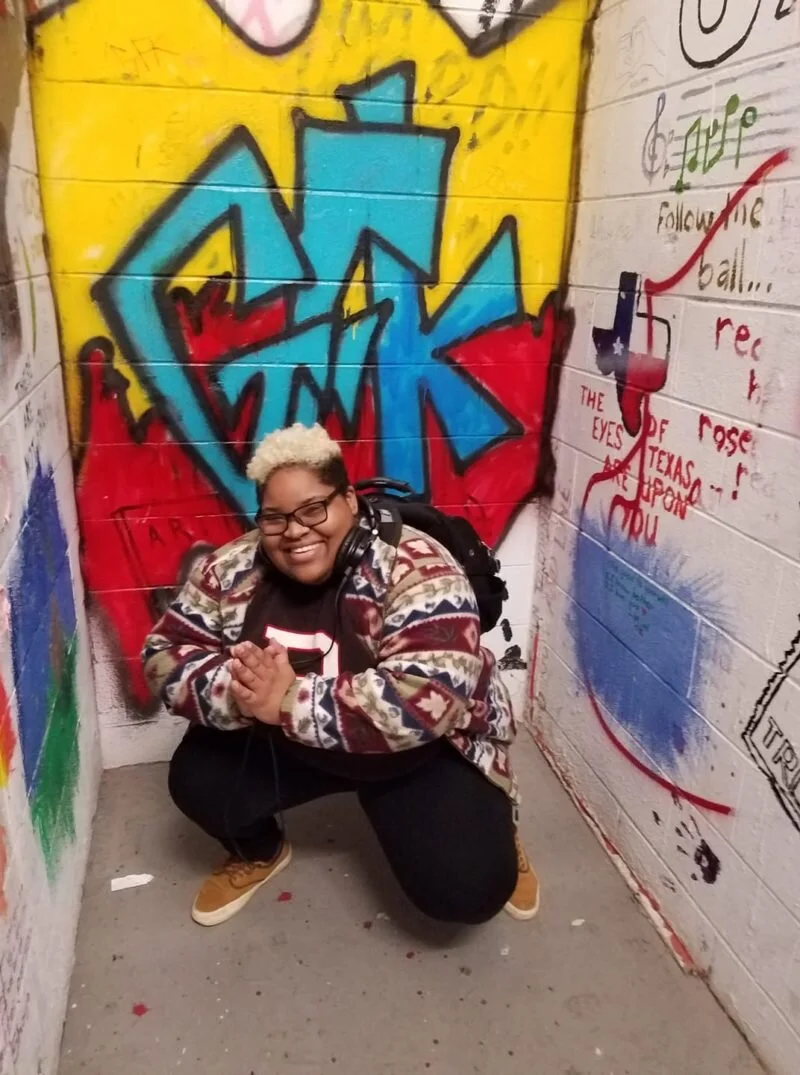
Senior Nikki Lee wears many hats: Mellon Mays fellow, Rugby player, Shakespeare performer, Fiona the Hippo lover, and board game aficionado. I was lucky enough to sit down with the ethnic studies and sociology concentrator to discuss her various activities on campus and thoughts about bodies and identity.As an undergraduate fellow, Nikki is writing a thesis on how the experiences of a small sample of people at Brown might signal larger trends about the discourse of fatness. Read on to discover why Fiona the Hippo is politically relevant and what recurring theme Nikki found across the many stories she collected from students at Brown. Oh, and also to find out what her deal is!
Nikki played one of the witches in a production of Macbeth last semester.
We received a nomination for you from someone who told us that you have some really interesting thoughts on bodies, identity, and fatness. So just to start off, what are these thoughts?I’m writing my thesis on fatness as a social construction and how that particularly intersects with race, because those are two very salient social experiences, being racialized and having a fat body and the message that carries in American society. I came up with this sophomore year because I’m a Mellon Mays fellow, which I hate saying because it feels like "I have a fellowship." But no, I had this idea since sophomore year and I proposed this and now they’re giving me money to do it, which is really dope. It just came from me growing up in rural New York and being fat and being brown and then coming to Brown and being like, I have so many people I can talk about race with but I can’t really talk to anyone about what it’s like to have a specific kind of body like that. So that’s kind of where it came from.So, you were saying you have a fellowship. Can you describe your fellowship?Yes. So the Mellon Mays -- people thinks it’s mayonnaise, but it’s two separate words -- Mellon Mays Undergraduate Fellowship is a fellowship for people of color who want to pursue opportunities in academia like being a professor or getting a PhD. So that’s been a really cool and important opportunity for me. I’m like a cohort with five other people and they’re all doing amazing work. Actually one of the other people in my cohort who’s Navajo made this shirt. She’s an amazing artist also. Shout-out to Sierra. But everyone’s doing amazing work and it feels good to have a community both in my year and in the years before and after me who are people of color dedicated to doing all sorts of different kinds of work. So that’s been a really cool experience for me. It's kind of cool to be working on this project even though it’s stressing me the hell out right now because I’m trying to have a draft done by spring break. But it’s been a really good experience and I’m happy that I’ve been pushed in the direction of doing a thesis and pushed in the direction of doing grad school even though thinking about it is stressful but good at the same time.
Nikki and the rest of her Mellon Mays cohort.
So how did you first learn about the fellowship and get into it?I played varsity rugby my first two and half years at Brown, and two of my teammates were Mellon Mays fellows. And they were like if you have some ideas, or you want to pursue academia, you should think about this fellowship. And I would ask them about it and bounce some ideas off of them and some faculty who I was trying to work with. And they were like yeah, you should go for it and apply, so I had heard of it, but I was really indebted to those players who were like you should just go for it. It’s been really great for me.So is there anything else you do on campus?I played rugby, I don’t play anymore because I got busy writing this thesis, but that was a big part of my first two years here. I got into powerlifting, which was really cool. I also dabble in theater, which was funny because I did theater all through middle school and high school, and I just stopped here. And then only last year did I start doing theater again. But that’s been a really cool experience here. It’s not really a campus activity, but I’m also really into board games, Dungeons and Dragons and stuff. I’m involved with ethnic studies because that’s my concentration, and sociology. But one of those departments is better than the other.Which one?Ethnic studies is better. The field of sociology is amazing. It’s just the Brown sociology department is alright. But no hate. I had a good time.What theater productions have you been involved with?Most recently I was in PW’s Julius Caesar. It was a really, really good theater experience. It reminded me of why people even do theater because sometimes it’s just like this is so much effort. I was also in Shakespeare on the Green’s Macbeth, continuing the Shakespeare theme. And then I was in this cool avant-garde dance piece this time last year called Bedroom Vignettes, which was funny because I am not a dancer. It was kind of like Shakespeare Cymbeline mixed with dancing. It was just a whole thing. It was really cool, I don’t know how to explain it. It was very Brown.
Nikki in PW's production of Julius Caesar.
So, just going back to your thesis, how long is it and could you give a quick summary of what it’s about?At least in ethnic studies, theses don’t really have a set length they have to be. 50 to 80 pages [is] what I’m aiming for. As long as I talk about what I need to talk about and it’s over fifty pages, it’s good. It’s just like writing a really long paper. Basically what it’s about is I have this whole thing where the experience of being a person of color and that experience of having a racialized body and the experience of having a fat body. I was curious about how that affects people’s identity and how they form thoughts about themselves. So I’m kind of looking at Brown as a microcosm, in that Brown is a primarily white, upper class, unofficially very skinny, conventionally attractive school. I don’t know why. I remember back when I was a freshman there were all these things like "Brown is the most attractive school in the nation." So I was kind of thinking about that. I’ve been interviewing people, and I’ve put out a couple of surveys to speak to Brown students who identify as being fat and talking to them about what that means and their background. And talking to both white people and people of color to see how their experiences differ or don’t differ. It's been really interesting because it’s mostly just been talking to people about their lives and what they want to share with me. Obviously everyone is very unique and different so it’s interesting to hear about where people come from and how that’s impacting their time at Brown and what Brown is like for them. It’s been really interesting to work on that. I’m going to be analyzing those interviews for common themes, common thoughts, ideas, and analyzing that and comparing it to all the books I’ve read and theory I’ve read to see how it holds up and what that tells me about what a small group of people at Brown might say about larger trends about the discourse around fatness and obesity. And why I use the word “fat” and not another word, because “obese” and “overweight” are very medicalized, salient terms that carry a certain connotation, whereas other words like “curvy” or “chubby” don’t really have the same implication as the word fat, which is a word that some people don’t like. So I purposely use that because when people claim fatness that’s a very specific experience and choice so I’m really purposeful in using that in my research. People always ask that, so I think it’s important. The first part was reading a ton of books for my literature review, journal articles. Here’s what everyone has to say about this, and here’s where I think there’s a gap where I think my work can fit. And then you gather the data and analyze the data and I’m working on all that still. I’m trying to graduate, so this will get written. It’s coming.Is there any story that jumped out to you in your research?Something that’s interesting -- more a common theme than a story -- that came up a lot was people talking about communities of color here at Brown, which are generally really thoughtful and progressive, and how even those communities are susceptible to Eurocentric beauty standards and ideas of having a body that are pretty normative. Which is not me shitting on them. Just talking to people turned into complaining, which is the best kind of interview. All our friends in relationships are like help me with all of our problems, and I’m like you know I’m not dating anyone because I look like this at Brown University. Or going to cool parties with all your cool friends of color but you’re still alone and no one hits on you. And you live your life, it’s not like your time at Brown is useless because you’re not getting attention from people in that way. It was kind of thinking there’s something at work here that is preventing this magic world where everyone is viewed equally, because that’s just not how it works, even though at Brown we like to think that we’re not susceptible to any of that, and obviously we are. I think being aware of that is more important than anything. So that’s kind of this idea of desirability politics and who and what groups gets to be spokespeople of what people look like. And it’s interesting and taught me a lot about what I’ve felt about my time at Brown. Even though I’m not writing about myself, a lot of this is kind of autobiographical where I’m thinking about my time at Brown and how a lot of it has been amazing and a lot of it has been really questionable. So that’s something that, because people brought it up, I’ve been thinking about. It’s been an experience. We were told that the most important question to ask you is the following: Why is Fiona the Hippo so important in today’s political climate?That’s an amazingly important question. So for those of you who don’t know, I have a pretty obvious Facebook presence -- feel free to friend me, anyone who ends up reading this. I’m in all these animal-based groups, like I follow Dog Spotting, Cool Dog group, Cool Cat group, etc. So I just have animals on my timeline all the time because it gives me hope in this existence. And I guess the Facebook algorithm just showed me content from the Cincinnati Zoo, and I saw that this tiny hippo was born and it was super premature. And it was only like thirty pounds, and I think the average birth weight for hippos is like sixty pounds. So I thought oh, this hippo’s not going to live. But then she did! And her name is Fiona. And it’s wild because it’s not even just me; it’s this huge social media phenomenon and everyone is watching her grow and she’s like a year old now. And it’s amazing.The way I feel about it is that she’s a hippo and she’s cute and that’s worthy in its own right. But I guess the way I come at it is that she’s a body positive superstar. She’s just big and lumpy and cute and weighs six hundred pounds now. So love that! But she’s a character in a way. She’s obviously just an animal but she’s really sassy. If you watch videos of her interacting with people through the glass, she knows she’s a big deal and it’s really cute. She lives with her mom Bibi. She lived with her father Henry but he unfortunately passed away a month or two ago. So it’s the two of them and they live together.She’s just something people can hold onto when all this stuff is in turmoil and things are very volatile right now in and outside of the United States and college is hard and so it’s like...all those things you can put away into this tiny little hippo that is just living her life in this carefree way. It’s not even just her being an animal devoid of sentience. There’s something about her energy -- like it’s going to be okay and I’m going to spin around. I am just enamored with her, and it also just feels good to know that other people like it. I was kind of sharing it for myself at first but then people were like I love it when you share all of these Fiona posts so I was like cool, I’ll keep doing it. Because I’ve had multiple people tell me that they feel much better when they see Fiona the Hippo, and I was like I’m so glad that can help other people too. Even though it’s just like cute animal pictures, there’s something about Fiona that’s special and kind of a testament to pushing through stuff and just living your damn life whether you’re a hippo at a zoo or just trying to graduate and write your thesis or being a confused freshman...all those things. So that’s kind of my thesis on that, I guess. She’s great!Before we wrap up, is there anything else you'd like to mention?Dungeons and Dragons is great. More people should play it. It's not as complicated as people think, and it's finally becoming cool so people should hop onto the bandwagon because no one will make fun of you anymore. Hit me up if you want to play more Dungeons and Dragons. I also own about fifty board games. I've wasted so much money on board games. It's a hobby. I tell my mom I could be on drugs, but I'm not. I play board games.I live in Rochester, New York, which has one of the better tech colleges in the United States, so there's a bunch of nerdy things by the campus like a giant board game store. So I'll go there and spend my Christmas money there. But I've had a really good time with my friends when we're playing board games. I think everyone should play more board games. So that's my plug for all my nerdy outside-of-school habits.In general, do shit you want to do in college, because it's cool. Whatever that is.
Nikki with her extensive collection of board games.
This interview has been edited and condensed for clarity. Images via Nikki Lee ’18.