
How Donald Trump is going to ruin the environment (and what you can do about it)
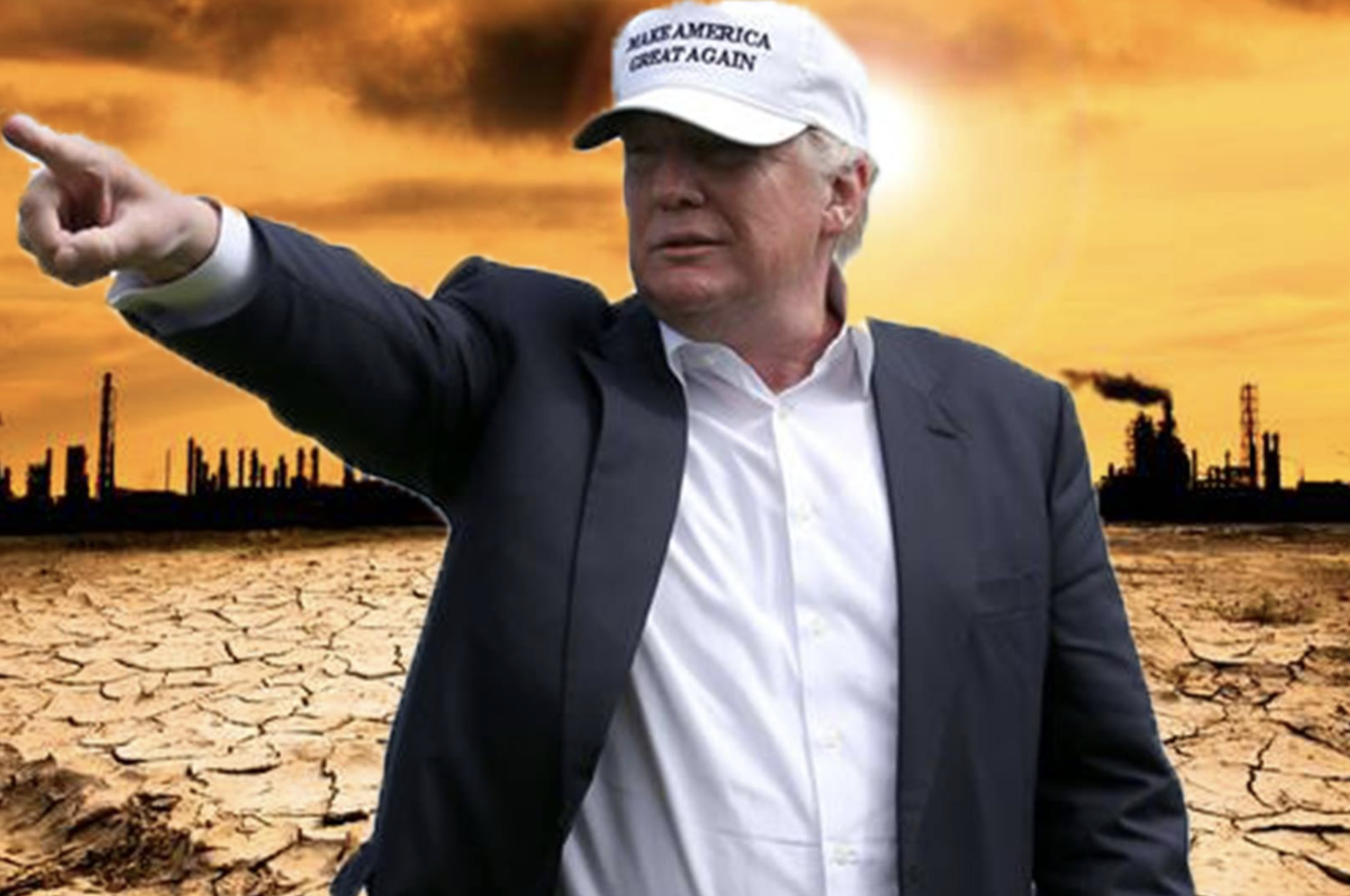
This Wednesday, only eleven days after Donald Trump was inaugurated as the United States of America's forty-fifth president, Brown students, professors, and other concerned Rhode Island residents gathered at emPOWER's Teach-In on the Environment Under Trump to express their discontent concerning Trump's alarming attitudes towards climate change, pipelines, the EPA, and the environment in general.What we learned was at times horrifying, alarming, and, finally, somewhat comforting--because even though the progress that has been made in the past decades is now being threatened by a dangerous new administration, there is much we can do to protect our planet.But first? We have to understand Trump's positions on critical topics. Here's what the panel had to say about Trump's views.On Pipelines: On January 24, Trump commenced working on the construction of the Dakota Access Pipeline and the Keystone XL Pipeline. The construction of the Dakota Access Pipeline is troubling for a number of reasons, ranging from contamination of water for thousands to disturbance and destabilization of land. Tribal opposition to this pipeline has been powerful.According to Elizabeth Hoover, Professor of American Studies at Brown University, "Trump has declared through a memorandum... that this pipeline is going to happen. He has financial investments and interests in pipelines... I remember, in January, people were still in the camp, still getting shot at with rubber bullets and tear gas, as people are still resisting the threat of this pipeline."She described how, as part of the resistance to the Keystone XL pipeline--running from the Tar Sands in Alberta, Canada, to the Gulf of Mexico--protestors planted heritage seeds reclaimed from the 1800s over the pipeline's path. "Obama shut down that pipeline; Trump has said that he is very interested in gearing that pipeline up again," said Hoover. Trump's administration has also talked about privatizing tribes, an idea that Hoover believes would have "terrifying implications" for indigenous peoples, as it would remove the power of Native Americans to establish regulations for environmental cleanup on tribal lands. On the Interior: After the Interior Department tweeted a picture comparing the inauguration crowds of Obama and Trump, Trump ordered the department to stop using their account altogether. Ryan Zinke, Trump's designated nominee for Interior Secretary, has a consistent history of voting against environmentalists on the subject of fossil fuel usage and climate change denial.On Climate Change: "It's hard to know what promises he's going to follow through on, partly because we're judging largely on a series of tweets and campaign speeches," said Matthew Hodgetts, a panel member with a Ph.D. in political science. "But if we take those seriously... his plan is to rescind all of Obama's executive orders, primarily targeting the Climate Action Plan."The Climate Action Plan is a program aiming to cut domestic carbon pollution, prepare the United States for the effects of climate change, and strive to address climate change on a global level. "His views on climate change are a little short of being a denier, so he's called a 'lukewarmer.'" While Trump has recently admitted that human activities are connected to climate change, he appears to be primarily concerned with climate change's effects on the fossil fuel industry, rather than on the world itself.On the EPA: Trump has nominated Scott Pruitt, the attorney general of fossil fuel-favoring Oklahoma, to head the Environmental Protection Agency--a shocking move, considering that Pruitt has devoted much of his time to attacking the EPA, going as far as to sue it in February 2016. Trump's transitional team has planned over $800 million in budget cuts to the EPA. Fears have already arisen over the Trump administration's alterations of EPA climate change websites.
 The future seems gloomy for our beautiful nation, Gulf Stream waters and redwood forests and all. But in actuality, there is much that can be done to protect the environment on both a local and national level.Get involved in the community! Brown University and Rhode Island have a plethora of groups dedicated to protecting the environment. Within Brown, there is Brown emPOWER, which focuses on climate, food, and sustainability issues, as well as the currently-in-formation Environmental Justice @ Brown (contact logan_dreher@brown.edu), which focuses more on issues of justice on the local, national, and international level. Rhode Island Student Climate Coalition is a Rhode Island-specific group dedicated to tackling the issue of climate change.Contact your representatives! You elected them, so they have to listen to you. Contact Governor Gina Raimondo (401-222-2080), Senator Jack Reed (401-528-5200), Senator Sheldon Whitehouse (401-453-5294), Providence Mayor Jorge Elorza (401-421-2489), RI Senate President M. Teresa Paiva-Weed (401-222-6655), and Speaker of the RI House Nicholas Mattiello (401-222-2466). The Blognonian has tips on how to mentally prepare yourself for calling the White House, or other representatives.Know your facts. Challenge those around you with ideas not based in fact. SkepticalScience is a great resource that provides in-depth rebuttals to virtually any claim that a climate-change denier could make.Images via, via, and via.
