
Brown Lecture Board Presents: Viola Davis, Hero
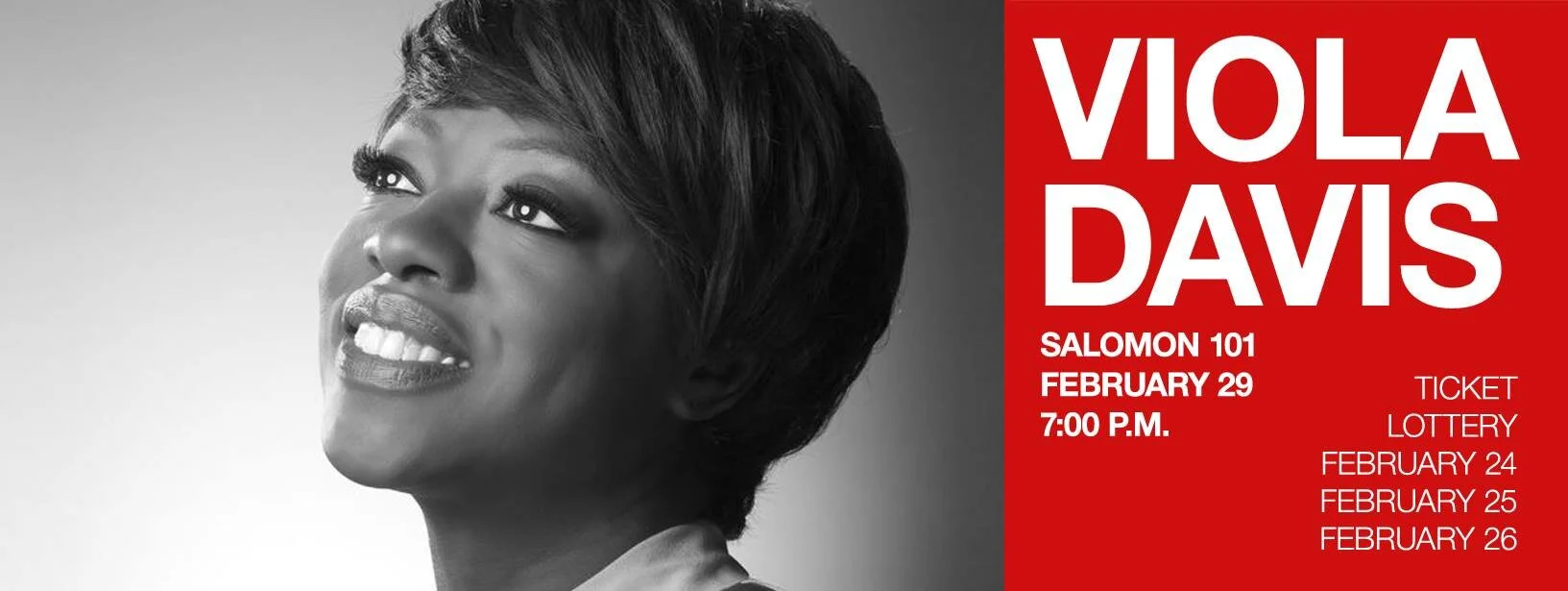
Perhaps more than ever before, 2015 saw the American discussion of representation in media reach new, conversation-capturing heights, and 2016 looks to be no different. For the second year in a row, the Oscars have failed to include candidates of color in any categories, despite a year of standout performances by actors of color in films such as Creed, Straight Outta Compton, and Beasts of No Nation. Adding the incessantly ingrained sexism of the industry only deepens the seemingly insurmountable challenge that discriminatory media representation presents.
Enter Viola Davis.
Just months ago, Davis became the first ever black woman to win an Emmy for Outstanding Lead Actress in a Drama Series for her role as Annalise Keating on ABC’s award-winning drama How to Get Away with Murder. The Emmy and Tony award winning actress grew up in Rhode Island before attending Juilliard at the dawn of her career. On Monday, she returned to her home state as the Brown Lecture Board’s spring speaker. Davis was chosen by a poll of Brown students, beating out the likes of Edward Snowden, Toni Morrison, and Fred Armisen. As a figure whose sheer existence works to dismantle entrenched norms of recognition in the entertainment industry, Davis took to the stage to discuss her unique perspectives on the issues facing women and people of color in Hollywood today.
Davis began her speech with a bold pronouncement: “My name is Viola Davis, and I am a hero.” She explained her statement in the context of the monomyth formula developed by noted mythologist Joseph Campbell. According to Campbell, a hero (almost always male) rises out of ordinary circumstances with the aid of a mentor before defeating an evil and returning a “sweet elixir” to his people. Over the course of the speech, Davis described how her path from the ordinary circumstances of Central Falls, RI to worldwide Hollywood stardom shaped her worldview.
Davis’s upbringing was hardly ordinary. In her speech, she recounted memories of the rat-infested building in which she and her family were allowed to live rent-free for year and incidents of her alcoholic father abusing her mother. She recalled the times when—due to her status as the only black student at her elementary school—local white children would chase her down the street while threatening her and shouting slurs at her. It was only when she worked up the courage to stab one of them with a crocheting needle that the abuse stopped, and she began to sense that there was more to come.
Davis’s resolve to move beyond the poverty-stricken confines of Rhode Island took on a more directed form after her first transformative encounter with acting: when she watched the 1974 movie adaptation of The Autobiography of Miss Jane Pittman. Davis recounted a particular fascination with the performance of Cicely Tyson in the titular role of the film. “This was different,” Davis recalled. “This was craft.” Her subsequent resolve to become an actress led her to Rhode Island College and eventually to Juillard.
As one of the most ardent voices for women of color in the entertainment industry, Davis defies the status quo of Hollywood. Yet the single most important point of her speech was strikingly relatable for people of all races, genders, and beliefs: “the privilege of a lifetime is being who you are—owning your own story.” While owning their own stories remains a task of great difficulty for women of color in the entertainment industry, norm-defying figures like Viola Davis continue to combat the prejudiced institutions of the media. They are individuals who embody the principles of intersectionality required to bring the true breadth of American experiences—the "sweet elixir"—to Hollywood.
Image via.