
Bernie vs. Hillary: College
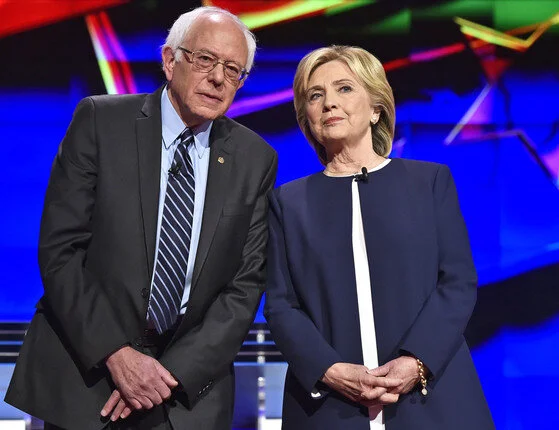
Earlier this month, the Brown Dems hosted an event where student representatives from both "Brown Students for Bernie" and "Brown Students for Hillary" outlined the histories of their respective candidates and explained where each one stood on various issues. While the topics were diverse, one struck me as especially relevant to the Brown community: education.While the candidates both focus more on public universities than private ones, their plans would also impact student loan programs. With Super Tuesday around the corner (don't forget to vote!), let's take a look at the tangible differences between the higher education plans of the two candidates.Where Sanders and Clinton Agree...Both Clinton and Sanders fund their plans with revenue gained from taxing the wealthy (Clinton would eliminate certain tax reductions which benefit the wealthy, while Sanders would introduce a Wall Street tax). Both candidates propose lower interest rates on student loans, and their plans would allow those who have already taken out loans to refinance them at the lower interest rate. In other words, they would be paid the difference between the cost of the loan with the higher interest rate and that of the loan with the lower interest rate.Both plans take into account costs other than tuition, like living expenses and books. They would use the Pell Grant program to alleviate those expenses. Sanders' plan also has universities maintain their current financial aid programs for the same reason....and where they don'tThe most fundamental difference between the two plans is that Sanders wants to make public universities tuition-free, while Clinton wants to make going to college debt-free. The Sanders plan would cost $70 billion a year, with two-thirds of that money coming from the federal government and the other third left for states to handle. The money would go to public colleges and take the place of student tuition. A piece on Slate breaks Sanders' plan down nicely.Clinton's plan–called The New College Compact–gets a bit more complicated, but here's what you need to know before delving into it: college costs underwent a steep climb during the recession, largely because states started taking money out of university programs and left students to take on the extra costs in the form of higher tuition. Under Clinton's plan, states that invest more in higher education would be rewarded with grants that would also go towards higher education.There are some other major aspects of her plan: community college would be tuition-free, students would be expected to contribute 10 hours worth of earnings per week towards their college education, and families would contribute in a way proportional to their incomes (which would sometimes mean taking out loans). The plan also aims to help students with kids go to college more easily and proposes penalties for schools whose graduates can't pay off their debt. For a more in-depth look at the plan (because yes, it does have a lot of components), we turn to Time. The good, the bad, and everything that could possibly go either wayResearching the proposed education plans and trying to figure out which is better is a rather tough business, largely because in politics, no one seems to agree on anything. Ben Casselman of FiveThirtyEight even has an article entitled "No One Can Agree How Much the Presidential Candidates' Tax Plans Will Cost," and, although it isn't education-specific, he does point out major disagreements among economists over the impact each candidate's agenda would have. He notes one reason for the discrepancies:
These plans don’t exist in isolation: Changes in tax policy have far-reaching ripple effects on the economy. In theory, there is little doubt that we should try to take such 'dynamic effects' into account, but in practice there is often significant disagreement among economists about how exactly to do so.
Similar disagreements seem to carry over to the policies involving higher education. Predictions of what will actually happen are complicated and not necessarily accurate, but I'll try to lay out the potential pros and cons of each plan, according to a whole bunch of different writers.A well-balanced piece from NPR notes that getting states to invest in higher education, as Clinton intends, is vital. Without any incentive to do so, we could reach the point where states divest entirely from university programs. But while Clinton's plan rewards states who increase the budget for higher education by giving them more money towards that budget, there is no guarantee that states will reinvest in the first place. The same piece also says that while the New College Compact includes a plan for income-based loan repayment, those payments would occur over long periods of time, which, due to interest, would increase the total cost of student loans.A piece in The New Yorker questions whether Hillary's plan should go further, making tuition free (like Sanders' plan does, and as is the case in countries like Germany) and either eliminating for-profit institutions or imposing higher regulations on them. Others have pointed out that Clinton's plan fails to live up to it's "debt-free" branding, because it requires families to take out loans.Some critics have bemoaned the cost of Clinton's plan; Andrew Kelly, a right-leaning, prominent critic of the plan, wrote a piece for Forbes in which he claims that past instances of allotting more federal money to higher education have not decreased tuition costs and that increasing spending only gives money to students who would attend college regardless.Sanders' plan, too, has come under criticism regarding its fiscal feasibility. A CNN article suggests that it might place too much of a burden on states, which would be expected to contribute one third of the budget. The same article also includes statements from Sanders' policy director, Warren Gunnels, who argues that the deal is actually beneficial for state governments in that it provides them with money in the first place. He compares it to the implementation of Medicaid, a program where 60% of the money came from the feds. Sanders' education plan would be similarly funded.Then there is the question of whether providing free college is worth the investment. Would it actually create a better-educated workforce? Some argue it would not, because the three most college-educated countries are South Korea, Japan, and Canada, and all of them charge relatively high tuition.The efficacy questionActually getting the plans implemented is an entirely different issue. An article from Politico posits that Clinton's plan would be unlikely to go over well with Congressional Republicans because of the tax increases involved, but the New York Times suggests that it could gain bipartisan support, as the cost of college is a source of anxiety for Democrats and Republicans alike.Sanders' critics have latched onto the idea that his education plans are too idealistic or extreme to ever make it through Congress, especially considering that since the 1950s, we've often ended up with divided government, where a Democrat is president and Republicans control Congress, or vice versa. Clinton herself has questioned whether Sanders' idealism would allow him to get anything done.The issue of education, then, is the manifestation of a larger theme we've been seeing during this particular democratic primary: the efficacy question. Which candidate would be able to get things done? It's a debate of idealism versus pragmatism, with considerable gray area in between.On the other hand, some have hypothesized that even if Clinton were elected, her ability to pursue policy changes would be no better than Sanders' if Republicans still controlled Congress.The question of whether a higher education revolution is actually feasible, or whether we are too entrenched in a system that requires more traditional politicians to navigate it, is still largely unanswered. While that's ultimately for voters to decide, it is worth checking out various takes on the efficacy question.Writer Bryce Covert, for example, has some thoughts on the situation.
The largest difference, and therefore what the Democratic Party is truly grappling with, is not about two different visions of the party. The choice is between two theories of change. It’s the difference between working the system and smashing it.
Image via.