
What's Your Deal?: Devonté Kavanaugh
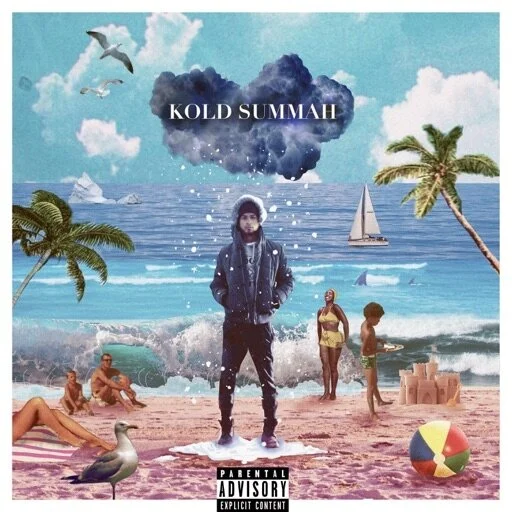
It was a cold and cloudy Thursday afternoon. I was prowling the Blue Room for a quiet spot. I was supposed to be meeting rapper Devonté Kavanaugh, also known as Té Kav, for an interview, and I was already late. The Blue Room, as per usual, was hopeless, so I met Devonté on the dismal first floor of Page-Robinson. I never realized how empty it is after the mailroom closes.
“Let’s just take the elevator up and work our way down,” he suggested, pressing the 4th floor button. We passed full classroom after full classroom, and by the time we found a nice, quiet spot, we were on the second floor. We sat in the empty hallway outside of the Student Employment Office, frosted glass doors surrounding us like we were in an eerie sci-fi flick.
Despite our strange surroundings, Devonté remained collected, chill. He looked almost comfortable in the plastic chair he had pulled up, taken from the lobby of the Employment Office. My Voice Memo app, which tags each recording based on its location, titled the interview “Tropical Smoothie Cafe.”.
Over the course of our conversation, the empty Page-Robinson hall echoed with our voices. Devonté spoke with much more positivity and honesty than my simple questions prompted, and his confidence and openness immediately brought life to the desolate space. He told me about his background, the experience of coming to Brown from a completely different world, and the challenge of bridging the gap between home and school. He talked about the importance of education, the messages he is trying to send through his music, and the gratitude he has for his student audience.
As both an interviewer and a human person, I am grateful for the chance I had to speak with Devonté. Meeting the thoughtful and funny musician made me understand why, no matter who you are, you will resonate with his music.
Gemma Brand-Wolf: Can you tell me a little bit about your music? What should new listeners know?
Devonté Kavanaugh: Yeah, so, I grew up on a lot of 90s hip-hop because my parents had me super young. So really, they’re 90s babies at heart ‘cuz they had me at like fifteen… So their era of music was like Wu Tang Clan, Jay Z, Nas, all those OG rappers. I was listening to all their old stuff with my dad, just like growing up, and as I started getting older, and I started getting into making my own music, I kinda just took those influences with me. But also because, you know, a 20 year old living in the 21st century, I also took influences of contemporary rap, and kind of blended them to make something that I felt right to me. Basically, I just try to make music that I think people will connect with. In hip hop today, a lot of people kinda just put out whatever they think will sell, they follow the narrative of ‘cool stuff,’ they try to be the dopest person -- you wanna make people think you’re cool, right? And that’s totally fine, a lot of people make good music off that, they make good money. But I feel like I really just want to be someone that people can relate to. ‘Cuz that’s how I got into music -- you know, Chance the Rapper, people like that, Kanye. People who are really soulful, have a really strong message in their music. That’s kinda what I wanna do for other people, seeing as how that’s how I got into music in the first place. I guess I would say if you’re a fan of hip hop or rap or just music in general, I make music that -- well, some of it’s like turn-up and crazy, and some of it’s sentimental and heartfelt. I try to just be myself, just be real, and make something that can be enjoyed by a really wide range of people. So people can be like, ‘yeah this guy just says stuff that’s real, and he gets it.’ Hopefully people take something from that, the experience they have listening to my music, not just like random stuff, you know.
GBW: You spoke about the message of your music, that you want to say something real. Is there something specific you want to say?
DK: Yeah, so I’ll just talk about my personal experiences or talk about things that apply to a lot of people. For example, I come from a family -- you know, a broken household -- people dealing with poverty and addiction, things like that. And, you know, today in rap, it’s usually not cool to be someone who’s educated or goes to school if you’re from those backgrounds. Like I was always called ‘the white black kid’ or being called a nerd and shit like that. I want to communicate that there’s nothing wrong with being educated, being smart, and still doing music. You can still do both of those things. I think it’s important to speak to those truths, especially in black communities. You hear rappers saying, like, ‘dropped out of high school and now I’m rich,’ and that’s just not the type of thing you want kids to be hearing because then kids will drop out of high school and think that’s what they should be doing. So, I guess I try to speak to my experiences, but a lot of times I'll just talk about things I think about that don't necessarily relate to my own my life. Like, I’ll just talk about how life is just fucking flying by -- I have a song called “Father Flash” I like a lot. I call it “Father Flash” instead of “Father Time” because -- Flash, you know the dude is fast and time is just flying by. I remember being in middle school, like ‘ugh, high school is so far away.’ And then I'm in high school and it’s like, ‘I'm never gonna be in college.’ Then I get to college and Im like ‘I'm never gonna graduate from Brown, that’s so far away.’ And now I’m a senior and life is just going, going, going. I think that’s something everyone can relate to, life is just blurring by your face, you know. So, yeah, I try to speak to experiences that can relate to people in general and things that I have personally dealt with.
GBW: That was something I was just thinking about today, actually, and this whole semester. What is going on, where did the last month go??
DK: Yeah I literally feel like I was just a freshman yesterday, and now I’m about to graduate. Like, woah, this is crazy. I'll make songs about things like that, and maybe current events -- just whatever I feel like people need to hear at the moment.
GBW: Does the audience that you have affect these messages? How do you like having an audience that’s mostly a students right now?
DK: It's so tough because I don't live far from here. I live in Massachusetts half an hour away. So like, people here get my music a lot more than people back home. Because back home I get a lot of shit -- people are like ‘oh the Devonté’s not hood, he never been hard, he’s never been in a gang, he thinks he can rap.” Bro, rap is not about being in a gang. In the past rappers have had those experiences and so maybe people stereotype that as what a rapper is, but that’s not what rap is. Rap is poetry in motion. Rap is… music. It's speaking on your experiences and your thoughts and your feelings. So people --
**In the empty hallway, there is a scratching sound. A shadow passes behind one of the frosted-glass doors. I think the sci-fi mystery has begun, but then…**
DK: Is that a dog in there?
GBW: Yeah, there’s definitely a dog in there…
**Turns out the hall was not empty, and I apologize to the dog (which seemed really cute based on its silhouette) and its owner for disrupting your work**
DK: So anyway, I think people here understand me more than people back home. So it's tough to kind of appeal to both audiences because I don't want to be so disconnected to people back home ‘cuz I grew up with them. But also I want to make music that I want to make. So it's tough to kind of bridge that gap and bridge those two audiences. But I would say that having a student body audience is incredible because they're just so supportive and so energetic and the love is unreal. Hundreds of kids we just pull up just to have a good time -- I don't even know if I'm going to have time. Am I actually good, or are y’all just nice people? -- It’s definitely gonna be a big transition going from having a really energetic young student body that knows me, people know me personally, then to graduating and making music. Being in Detroit -- which is where I'm going to be -- just getting random people to just like me for who I am, that’s gonna be difficult but I'm willing to take on that challenge.
GBW: So you’re going to Detroit? You’re graduating?
DK: I'm from Mass but I actually recently was in Detroit last summer. ‘Cuz long story short a buddy of mine got connected with some people out there just like in the music industry -- he’s my manager, actually, he's my roommate but he’s also my manager now. -- And he got connected with people out there and we were out there all summer networking and making music. So we're going to go back when we graduate to hopefully keep the ball rolling and make something happen.
GBW: Right. So you're gonna keep making music?
DK: Mmmhmm.
GBW: You spoke about bridging that gap between home life and school life. Going forward, do you see the future of your music going in that direction or somewhere else maybe or…?
DK: I don't know. It changes so much based on what's going on in my life because most times it’s like what's happened to me like right now. So it'll definitely change because I hopefully will get better and grow and advance. But I don't think it will stray too far from what I've been doing because I'm still gonna be me, even if I go down a different path. I'm just worried that -- well, I don't want to ever sell out because that's a nice shortcut to attention. But I feel like if I can build a strong foundation by being myself, you know, victory would be so much sweeter. But it's gonna be tough to go through that long game and build a real foundation as opposed to taking the shortcut and just getting there, knowing I can do that like a lot of people are. It’s tough.
GBW: Is there any advice you would want to give to any artists starting out? You know, whether they're in music or just kind of trying to bridge that gap you spoke about -- coming from a different background to a place like Brown.
DK: I've learned that no matter what you're doing, there's a lot of noise always from different angles -- just like noise noise noise -- people saying things, different opinions, different perspectives, different voices, different audiences. And I would say that you have to be aware of who's watching and listening, but you don't have to conform to anything because this is still your craft and your art no matter what. And if you stick to that and stay true to that and you keep working at it -- of course you should listen to advice and take criticism -- but don't let that change your vision. Rememver where you began and where you want to go and don't lose sight of that, even though it's gonna be really fucking difficult. That’s the biggest thing, because that's how you get lost in the sauce. And you don't want to get lost in the sauce. Which is really it's a lot harder than it sounds because I got people saying, ‘you should make this kind of song, you should make that kind of song, you do this, you should do that.’ I have all these ideas and I'm like, ‘Okay, what the fuck? People here would love that, people there would hate that.’ But you can't please everybody. You've got to kind of do what you believe -- that sounds kind of generic, but that's really true.
GBW: Yeah, I mean cliches are cliches for a reason.
DK: Yeah, it’s the truth. You just gotta have tunnel vision. It gets rocky with people just saying shit all over the place but it's like, ‘I know what I want, I know where I’m going.’ Just stick to that and you should be good. You know, you need a little luck in some of those areas, but you should be find.
GBW: And like you said, you just need a supportive group of people to listen.
DK: Yeah, I mean making music in college is a good place to start because you have so many kids. I mean, most of the audiences of any artists are kids -- you know 16 to our age age demographics. Having disposable of just thousands of kids listening your stuff and coming to support you is really just a lay up. It's such a blessing, it’s not even fair. So I'm grateful for that for sure.
GBW: Yeah, that's awesome. So, where can people find your music? The whole ~Like and Subscribe~ kinda deal, you know?
DK: I'm on everything. It’s @tekavmusic because my name’s Devonté Kavanaugh, so it’s Té-Kav, you know? I’m on all platforms: Spotify, Apple Music, SoundCloud, whatever.
GBW: MySpace, LinkedIn..?
DK: *Laughing* MySpace is dead, so not on that.
GBW: Tumblr, Facebook…?
DK: I’m on Rap Genius. I'm on Reddit. Dude, we have been looking for any pocket to get people to listen, you have no idea. I actually just had song hit ninety five thousand streams, so hopefully I’ll hit about 100 thousand soon, which would be a big milestone. Yeah, Spotify, Tidal, literally all of those. Amazon, Google Play, Pandora -- fucking Shazam -- whatever you have, it’s on there.
So, there you have it. What started as a strange hunt for an open room in Page-Robinson ended up being a meaningful and fun conversation. What started as an empty room (with some questionable interior design choices) ended up being filled with Devonté’s sincere and expressive voice. Time really does fly, and our twenty minute conversation certainly felt much shorter than that. I may be biased, but I think this is an interview worth reading. However, if you don’t have enough time to do so, let me tell you what you need to know: Devonté Kavanaugh is a good person who makes good music and you should go listen to it.