
Making It in Hollywood: An Interview with Screenwriter Mike Makowsky
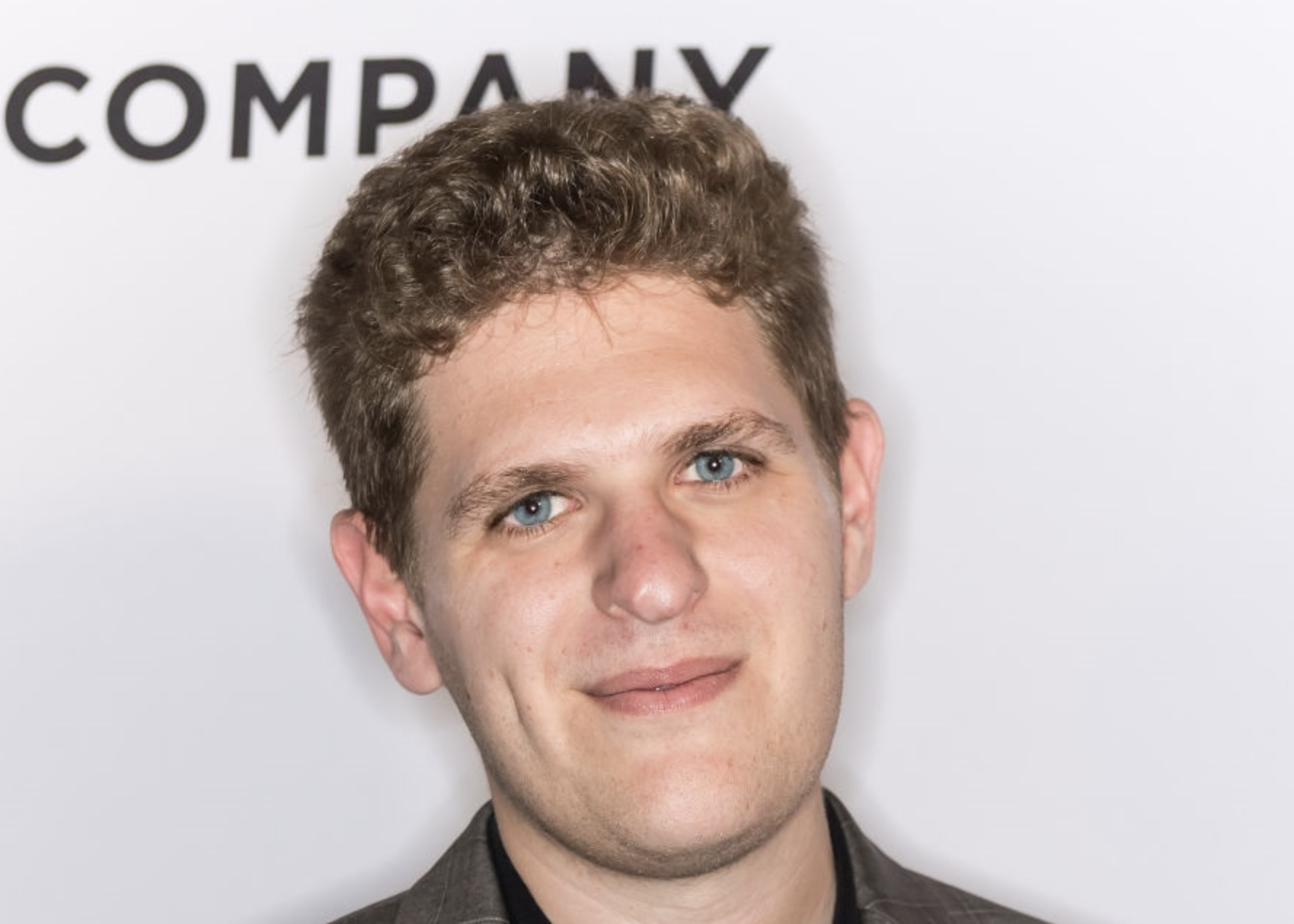
Mike Makowsky ‘13 is making it as a screenwriter. This is no easy feat, especially for someone only five years out of college. After writing scripts and making short films at Brown (he even made a web-series about Blog, which was aptly called “The Blog”), Makowsky moved out to LA, as many entertainment-hopefuls do. It didn’t take long before he had two scripts featured on Hollywood’s “Black List,” a collection of the year’s best unproduced scripts. This was announced on video by actor Domhnall Gleeson and the kids of Stranger Things, which is maybe even cooler than getting on the list itself. Earlier this year, a film he wrote and produced premiered at Sundance Film Festival. That film is the post-apocalyptic tale I Think We’re Alone Now, starring Peter Dinklage and Elle Fanning. For any screenwriter, let alone one so early in his career, this is kind of a Very Big Deal. Even though I Think We’re Alone Now hasn’t even had its theatrical release, Makowsky is already working on another exciting project. In August, another film he penned, Bad Education, will go into production. The film is based on a true story from Makowsky’s hometown, and Hugh Jackman is in talks for the lead. We chatted with Makowsky about his path from Brown to the big screen, and how he went from making short films with his friends to getting Tyrion Lannister and Wolverine to say lines he wrote. Side note: Is it a coincidence that Makowsky is a successful Hollywood screenwriter and also a Blog alum? We think not. KG: First of all, this is a broad question, but what was your experience like at Brown? What were the highlights of Brown for you, and how did that translate into your life after Brown?MM: I started writing on Blog my sophomore year, and I really enjoyed that. I studied Literary Arts and took a bunch of MCM classes and English classes, and I think I always knew in some capacity that I wanted to write. It pretty much came down to taking the same screenwriting workshop like four times for credit. What was great about Brown was the fact that it was just so free-wheeling, and I could sort of fashion my own curriculum. I think it is what you make of it. I did a bunch of stuff for Ivy Film Festival and BTV [now BMP]. I actually started a web series about Blog. I wrote every week about what movies and television were streaming on Netflix. It was called “The Netflix Files.” Very original title. I would just write fun articles about which Air Bud movies you could and couldn’t find on Netflix. When Hey Arnold! came to Netflix, that was a pretty big deal. Were there any classes or professors at Brown that stayed with you or stuck out to you as being particularly influential?Deak Nabers’ Western class was my favorite class I took at Brown. It was amazing. We got to read a bunch of Western dime novels, watch a bunch of Westerns, and talk about the different tropes of the genre. Through the final paper, you got to argue, about some other piece of media traditionally not thought of as a classic Western, in what ways does it exhibit the themes of the Western genre, and I wrote about The Wire. I think that’s in a way epitomal of Brown in general, just the idea that it lets you reframe different things in your surroundings. I don’t know that I would’ve gotten a similar kind of experience elsewhere.The thing about Brown and filmmaking is, at least when I was there, the structure wasn’t necessarily in place for students to learn that kind of practical knowledge. But the great thing is that the resources are all available. There are a ton of cameras just sitting around waiting to be used. I think that was largely the impetus of why I decided to start making that web series, just to make something. There are so many talented actors and prospective filmmakers who just want the opportunity to experiment. One thing I look back on and that I’m happy I did is that, even if the output wasn’t always fantastic, I was at least able to start experimenting and putting stuff together. At Brown, you teach yourself. So it seems like you were interested in production while you were in college. How did you decide to pursue the writing aspect of film?Going into Brown, I knew I liked writing, but I wasn’t sure if I wanted to direct, and I do produce as well. I think I recognized very quickly that my passion lay more in storytelling. I think that’s what I felt I was probably strongest at. I had friends that were more interested in camera stuff, so we would band together and form a team, and I usually found myself in that writer position. There are all these resources for the taking at Brown, whether it’s actors in a really awesome drama program who are looking for stuff for their reel or just the people that want to get involved in film. Banding the team together and organizing shoots, I found I really enjoyed that as well. Could you describe your path post-college? How do you go from being a college grad who knows you’re interested in this to actually pursuing it?I moved out to LA right after I graduated. I was a production assistant for a little while and realized I was more interested in the creative than physical production. I liked being on set, but I was much more excited by the idea of writing. Through sheer peer pressure, I was able to convince three of my friends from Brown, who I made a lot of stuff with back at school, to move out to LA for a year. We started a production company. We made five short films over the course of a year. It was called Slater Hall. I live in Slater Hall!Okay, I’ve never been inside. None of us had ever been inside, so we had ascribed some sort of metaphorical meaning to it. It was like, it’s uncharted territory [laughs]. I remember when I was at Brown, the one time I ever heard about Slater Hall was [when] a piece of plaster fell on a kid’s head while they were sleeping. So, Slater Hall was the name of the experiment, and we made a bunch of short films, and at that time I wasn’t necessarily sure where my voice as a writer lay. But it was nice to be able to go and make things on shoestring budgets. Gauging by which [of the films I’d written] got into festivals, I found that the voice that the outside world responded to most was the weird, darkly comedic one. So I started doubling down on that. I wrote at the end of the year my first real feature script. In my mind I wanted to write the lowest-budget, highest-concept dark comedy that I could possibly conceive of. Even if it wasn’t necessarily perfect, at least it would reflect some measure of originality. I wrote this script called Take Me that’s essentially just about two characters in a basement yelling at each other. And I just got really fortunate in that I, through some friend of a friend of a friend, was able to get it read and seen, and ultimately produced. 
A still from "Take Me"
I think that’s the hardest gap to bridge for so many people. Being like “okay, I have this script,” but what kind of channels can you use to get this in front of someone? It seems like it might be one of the hardest parts. When I graduated from school and started doing the Slater Hall thing, we were casting all these short films, and I really enjoy that process. I had just gotten an IMDbPro account, and there is potentially a way to contact professional talent and crew, and we used it like Banshees. Like mercilessly. So when we were casting the short films, I would often reach out to actors who I had seen in independent films that I’d really liked. One of these actors, a really really talented character actor named Pat Healy--who had been in a bunch of awesome Sundance and South by Southwest films that I loved--he agreed to be in one of our short films. We became friendly after, and when I wrote Take Me--I didn’t know any agents or producers or managers--but I had my friend Pat who I thought would be willing to read my feature script if I wrote one that had a role for him in it. So I wrote one of the two lead roles with him in mind, and when I finished the script and sent it to him, he really responded to it and essentially helped me get it seen and made, and he ended up directing and co-starring in it. He knew the Duplass Brothers, who ended up producing the film. That really jump-started the rest of everything. I was a young writer with an unsolicited script submission, I wasn’t exactly in any sort of power position, but after that, I found that people were far more willing to give me a chance and read my work. People were asking what I had next, so I scrambled and wrote a second script, which was another low-budget, two-character experiment. It was also vaguely post-apocalyptic. That totally unexpected shift from trying to get your stuff out there to suddenly people are expecting the next thing from you, I can imagine must be a little overwhelming.Yeah, it was hard enough for me to finish the one, and all of sudden everyone’s like “What’s the second one like?” I just panicked and spent a month--and a lot of caffeine--and I wrote this other script I Think We’re Alone Now. I, again, got really really lucky. Long story short, we shot that last year with Peter Dinklage and Elle Fanning and a director named Reed Morano, who did the first three episodes of The Handmaid’s Tale and who is the most bafflingly talented person I could ever hope to work with. And it was at Sundance this year.
Makowsky with Fanning, Morano, and Dinklage at the premiere of "I Think We're Alone Now"
What was it like having a much more visible project that was premiering at a huge festival?I still don’t quite know how to cope with that. I think it came out great. It was my first Sundance, and I’ve never had an experience quite like that before. It was eleven days--I went the entire time--and I got to see a bunch of other films and other filmmakers. Just to be swept up in that world, definitely a lifetime dream for myself but certainly something that I never really thought would ever happen. The film will be out, I believe, in September, and we’re really proud of it. After receiving some measure of success as a working screenwriter, is working in the entertainment industry what you thought it would be like?I think yes and no. You get to do what you love, and a lot of people don’t, and I feel very positive about that. There are ups and downs, and there will continue to be ups and downs, but I’m really really enjoying it. I’m definitely not disillusioned. It’s exciting to be able to conceive of an idea and write it down and have other people--people you’ve looked up to your entire life--buy into that vision and want to help tell that story. In that way, it’s the best feeling in the world. I’m extraordinarily fortunate and very happy. What is life like as a working screenwriter? What is a week in your life?I write for most of the day. I was a producer on I Think We’re Alone Now, and I’m a producer on my next project that’s shooting in August.We’re shooting another film in August based on real-life experiences from my childhood [hometown]. It’s insane. It was a story that I’d always been fascinated with, and at a certain point it felt like it would be exciting to try to write it down on paper. It’s crazy because you don’t necessarily think that the stuff that you’re interested in--the esoterica about your hometown--is going to translate to anything bigger. How much of being a screenwriter is the writing versus the logistical stuff like trying to get a script sold?There’s a lot of all of that. I’ve been fortunate in that I’ve gotten to retain a measure of creative authority in my work lately. I write most of the stuff that I do now on spec, and it’s different when a studio brings you an idea and you’re being paid to write it versus something that was borne out of you and your own thoughts and neuroses. You end up being able to shepherd it along a little further in the process, and that’s been exciting. To me, it’s much more exciting to be involved throughout and to be able to learn through osmosis, and to surround yourself with not only collaborators but mentors. 
A still from "I Think We're Alone Now"
Would you ever write for TV as well?It’s definitely something I’ve considered. When I was a teenager, I bought Final Draft and I started writing. I was writing, like, 24 fanfiction and putting it up online for the five people that would read it. I think I was always most excited about episodic television. I always thought I would move to LA and be a writer’s assistant and work in a [TV show] writer’s room. My senior thesis at Brown in the literary arts program was a teen soap in the vein of The O.C., which is so off-brand [compared to] the kinds of things I do now. I think I kind of just fell into film organically. I wrote a bunch of pilots, both at Brown and after, and I found that nobody really wanted to read them. The market was a little more prevalent, for a first-time writer at least, for an interesting, weird, offbeat independent feature film. Who are your favorite screenwriters? Who do you most look up to?I used to write the Oscar post every year for Blog, and I would do all the predictions. Going off of this past year’s Oscars, I think it was one of the strongest years for screenwriters in a really long time, and for screenwriter-directors. I mean, you have in the same year Martin McDonagh, Jordan Peele, Greta Gerwig, Guillermo del Toro, and, on the other end of the spectrum, these guys Neustadter and Weber who did The Disaster Artist. Last year was really cool. Charlie Brooker and Black Mirror. It’s a really exciting time, I think, for screenwriters that have cool, original ideas. Right now, the market, I think for the first time in a long time, really seems to favor ideas that are just different and offbeat. The fact that Get Out or Lady Bird or Three Billboards or Shape of Water can be Oscar movies, that never necessarily used to be the case. What is your process of starting a new script?I think it changes every time. I have certain ideas that I’ve had since second grade. I’ve been getting to a place where I’ve been trying to write a lot more true stories, so sometimes that’s just an article you read or a book that really speaks to you. But with original concepts, it’s usually borne out of an emotion I’ve been feeling or neuroses I’ve been having.A lot of times, I just write stuff for me and hope that people respond to it and connect with it. But sometimes you just feel like you need to get something down on the page. Once you finish it, you can kind of close the book on it, and hopefully there are other people in the atmosphere somewhere that want to help you make it. And if there aren’t, sometimes that’s okay, too.This interview has been edited for length and clarity. Images via, via, via.