
What's next?: Politics and policy in the era of Trump
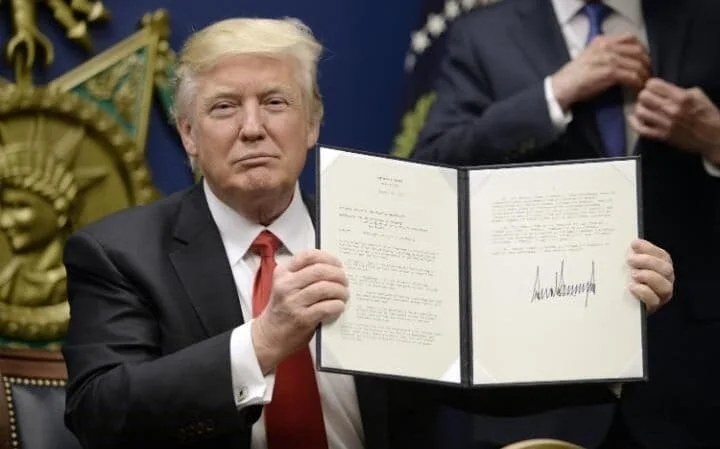
It has been thirty-eight days since Donald Trump was inaugurated as the United States of America's forty-fifth president. In those thirty-seven days, we've seen unprecedented cultural and political changes--the rise of the phenomena of "fake news" and "alternative facts", such as the harrowing (and wholly nonexistent) Bowling Green massacre, and the mysterious (and, coincidentally, nonexistent) terrorist attacks in Sweden; the Muslim ban indefinitely suspending immigration into the United States of America from "terror-prone" countries; and, to top it off, the appointment of a Cabinet "of the people" that, combined, is worth a total of $11 billion so far.The question that's all on our minds: is this what life is going to be like for the next four years?In the first week of February, Neera Tanden, president of the Center for American Progress, and Ramesh Ponnuru, senior editor for National Review magazine, joined us at Brown University to answer just that question. Their talk, Politics and Policy in the Era of Trump, drew from both liberal (Tanden) and conservative (Ponnuru) viewpoints, and focused on what we've seen so far under the Trump administration and what we'll see in the future. Here's what they had to say. On the Muslim ban:Ponnuru: "An unbalanced executive has amassed too much power," asserts Ponnuru. He goes on to explain that immigration is an area where Presidents typically have a lot of legal latitude, and that the Trump administration might be pushing that latitude to breaking point: "I wouldn’t be surprised if we ended up in a situation where the president’s power was curtailed. Because what had been under question ends up being enforced, and the courts end up articulating the limit to that power."
"I think we need to have a more balanced perspective in which there is a subset, a small fraction, of Muslims around the world who do think that their religion licenses political violence... and there is a slightly larger subset of them that are willing to tolerate that point of view. We have to recognize that reality. But at the same time, it would be extraordinarily counterproductive to push all of the peaceful and peace-loving Muslims into the camp of being with them because we decided that they’re all evil.”
Tanden: "Fundamentally, the challenge for the Trump administration is that it does not actually have a consistent view on the issue of terrorism. Just in the last 48 hours, the administration have put forth acts of terror that were not covered. All of the ‘acts of terror’ were done by Muslims, and none of them were done by white supremacists or against Muslims, like the most recent incident we just had in Quebec."
"It was George W. Bush who was a strong proponent of the idea of the idea that the United States should never articulate a case where we’re basically saying, all Muslims are bad, or that the Muslim religion is the enemy, because that, as George Bush said, would actually play into the hands of extremists and terrorist groups like ISIS—who, just to be clear, over the last 10 days or so, have been using Donald Trump’s Muslim ban as a recruitment tool."

On healthcare & repealing of the Affordable Care Act:Tanden: "As someone who's defended it over the last seven years... it was hard to get people that supported or focused on it because the people who liked it were like, 'It's fine', and the people who really didn't like it were motivated and energized. And now that we're actually having a debate about getting rid of the Affordable Care Act, people who have benefited from it are coming forward or going to town halls or organizing themselves in Republican districts. The popularity of the Affordable Care Act is at the highest that it's ever been.""I think the assault on it, or the effort to undo it, has shifted the discourse dramatically so that people are thinking of the benefits. I hope that the crazy debate we're having over it will actually fix some of the problems. In both sides in the Senate, we're coming to a place where people want to fix it rather than destroy it. And I think Republicans are wrestling with the fact that it's really hard to develop a new policy."Ponnuru: "So we've co-written a hundred-page report on what an Obamacare replacement ought to look like. Neera's identified some of the obstacles to actually making policy, on the conservative side. They're actually governing now. They're not just taking potshots. It seems to me that the central political factor of healthcare for decades has been public fear of disruption in their healthcare arrangements.""The problem from my standpoint is that the model of a national healthcare system that Obamacare embodies is much too regulatory and much too focused on comprehensive health insurance. It doesn't allow for catastrophic health insurance that would allow people to protect themselves against the risk of major financial setback. That is much of the actual value of health insurance. What I would like to see is a shift towards a new healthcare system where we continue to facilitate people's ability to get at least catastrophic coverage." On gender and abortion: Ponnuru: "As many things as Trump was able to violate in the conservative orthodoxy, if he had not staked out the pro-life position, however conveniently, he would not have been able to win the nomination. And you couldn't win the Democratic nomination running on a relatively pro-life position. You can view [abortion issues] from the perspective of individual rights on either side. And part of the coalitions tend to form and then come up with arguments that make everything fit together, rather than the other way around."Tanden: "I agree with Ramesh that these issues have become central on both sides. If you look at the Presidential debates, both candidates staked out the clearest articulation of their views on this issue. What I think is a fascinating trend is... what I'm seeing in relationship to Trump is that unlike other candidates or other political leaders, he has made gender issues both consciously and unconsciously front and center of the debate.""I am a leader of progressive organizations... and it's no joke of the size of [the number of people organizing against Trump's policies]. It was amazing. And there's marches all around the country, the largest marches we've seen in Alaska and Montana, and other states. I think, actually, issues over gender are cascading throughout not only what Trump is doing, but in the opposition to Trump.""Women are becoming more engaged politically than they ever have. Women are meeting the opposition. More women are taking political action than they've ever taken before. More women are leading. I think that that is a kind of psychological response to the election itself. A lot women woke up on November 9 and saw someone who bragged about sexual assault and saw that as a psychological wound. That is part of the opposition that's being created today. I have never seen such a political mobilization before."
 Have we entered a new era of insurgency?Ponnuru: Things always get "feverish" around election times, Ponnuru says, "but this time, the fever isn't breaking." There are now "two large coalitions, linked by hostility"--and both of them bear the conceit of believing that they represent the "people". Trump's rhetoric that his enemies don't speak for the people is a powerful one, especially considering the fact that his appeal to the "forgotten man" was one important factor in winning the election.Tanden: "This is the largest differential between the popular vote and the electoral college," Tanden says. If Donald Trump had followed George Bush's model, calling Democrats, trying to make an effort together, he could have gained more support. His current "two-week model" involves doing so many things that the opposition is utterly overwhelmed. "He's just galvanizing the opposition," Tanden explained. "There's no more team Hillary or team Bernie." Now, it's the world against Trump.Images via, via, via, via, and via.