
State of the Uterus "Address"
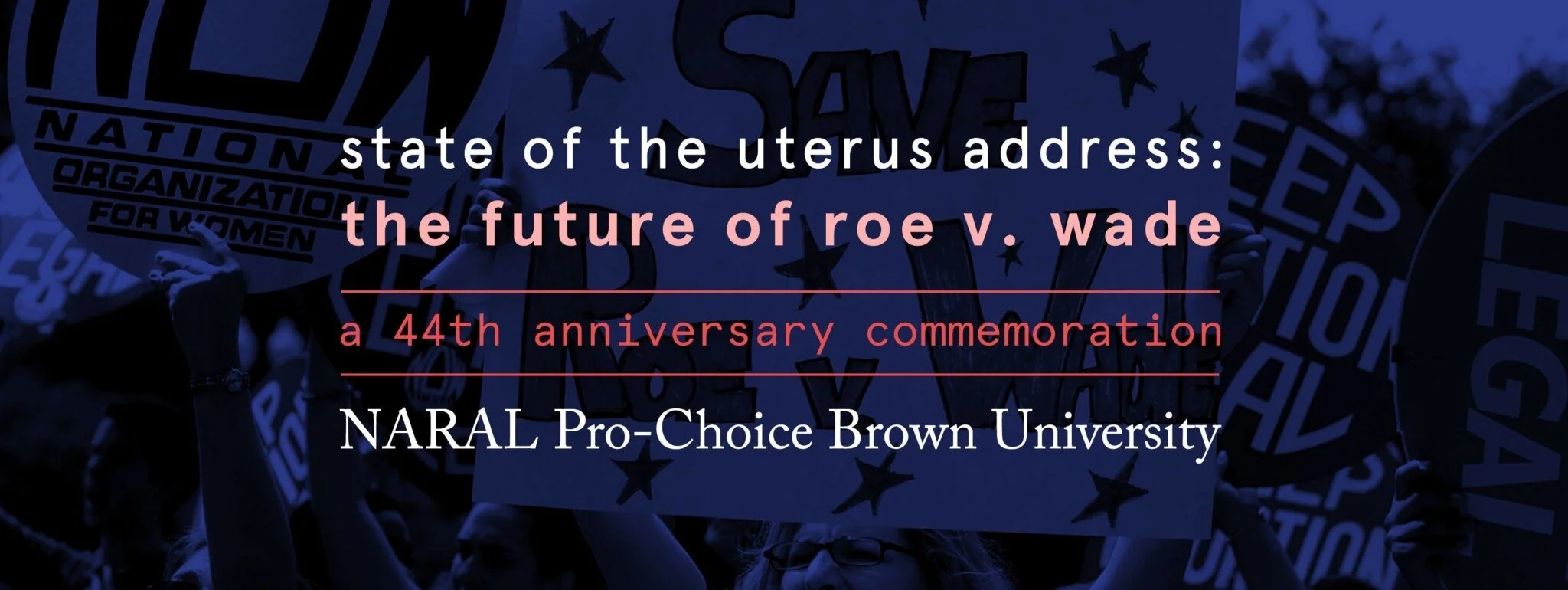
On Thursday, the Brown chapter of NARAL Pro-Choice held a State of the Uterus "address" honoring the 44th anniversary of the Roe v. Wade decision that legalized abortion. The talk aimed to prompt discussion about reproductive justice and the future of legal abortion, especially given the threat of reversal under the new administration. The Brown chapter invited Claire Phipps, the Director of Major Gifts at Planned Parenthood of Southern New England, Dr. Sarah Fox, an OB-GYN and professor at Brown, and Gopika Krishna, an Alpert Medical School student and reproductive rights activist.The general assessment was bleak. According to Phipps, only 6% of the services that Providence Planned Parenthood provides are abortions. The other services consist of STI tests and preventative care procedures like pap smears and breast exams. Ultimately, defunding Planned Parenthood (PP) would mean that patients on government health insurance cannot get covered for all the other reproductive health services. While the panelists avoided speaking directly about the election, Phipps ominously stated that “nothing is safe with the current administration.”With regards to Roe v. Wade, Dr. Fox opined that we “have to accept it’s quite likely the law will be overturned." Rhode Island received an F rating from NARAL for reproductive rights, making it particularly vulnerable should the decision be reversed. Although a deep-blue state, RI is also a pro-life state, in part because of it large Catholic population. Although some states have passed laws that allow Medicaid money to cover abortions, Rhode Island is one of seventeen states that does not allow it. And while Roe would not suddenly make abortion illegal, it does allow states to pass their own laws regarding legality. Currently, Planned Parenthood and other reproductive activists are pushing for the RI General Assembly to consider a bill that protects a woman's right to choose even if Roe v. Wade is overturned.Gopika, a fourth-year medical student, argued that all medical students should learn how to perform abortions, since one in three women has one during her lifetime. Brown's medical school includes a class in family planning among its graduation requirements, but in many other programs it is optional. Gopika’s take-home message, however, was that safe and legal abortions are not always available to those in lower socioeconomic strata. If abortion becomes illegal, those with the means to do so will be able to go to countries where it is legal, but those facing the greatest financial challenges in raising a child will have much less access to abortions.Despite this abysmal tone, the panel ended on a more positive note, encouraging conversation between people on different sides of the issue. Dr. Fox acknowledged that she probably won’t change minds, but she still sees tremendous value in attempts at mutual understanding between people of different beliefs.There are some reasons to be optimistic: abortion is at an all-time low since it was legalized 44 years ago, and although Rhode Island has a high teen birth rate compared to Connecticut and Massachusetts, that rate is still low nationally. And according to Dr. Fox, organizers are holding meetings to plan for a worst-case scenario. The panel ended by emphasizing the role students can play in the fight: talk, organize, run for office.Image via