
The Majesty of "Moonlight"
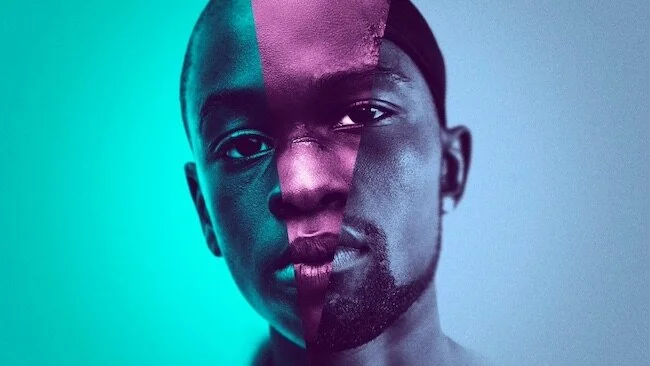
In a time when television seems to be replacing movies in quality, progressivism, and cultural relevance, Moonlight reminds us just how urgent and utterly powerful film can be. Moonlight follows Chiron, a poor, black boy in Miami grappling with his sexuality. The film is split into three parts, moving through life with Chiron from adolescence to adulthood. It is both choppy and seamless, managing to jump abruptly around ten years at a time without losing its emotional core. The plot is mere scaffolding, around which the characters, the colors, and the music make the film what it is.Directed by Barry Jenkins and based on the play In Moonlight Black Boys Look Blue by Tarell Alvin McCraney, Moonlight is wholly enchanting without ever wavering from its devotion to a single individual. This film is not a universal story about being poor, black, and gay; it is Chiron’s story. Every still, every song, every line seems to ache because Chiron aches. He yearns for closeness, guidance, strength, and love.We begin with Chiron as a young boy (Alex Hibbert), taunted with the nickname “Little,” with a mother who doesn’t seem to notice, and without a father at all. He often finds himself with Juan (Mahershala Ali) and his girlfriend, Teresa (Janelle Monáe), who stand in as parental figures. Though Juan is initially characterized through his involvement in the Miami drug trade—which the film explores, but never exploits—he is almost a magical figure for Chiron. In a stunning scene, Juan teaches Chiron to swim, a moment saturated with staggering tenderness. He holds Chiron in his hands, small and glistening, nothing in sight, but their two bodies against the muted ocean blue. Watching Moonlight feels a little like floating on your back. Swaying with the heavy waters, an unnerving calm settles over you, waves lapping onto your exposed skin. Then, quickly, without warning, the invisible depths envelop you, wrenching your body from the universe you only just grew to understand.We are transported to Chiron’s high school self, played by Ashton Sanders. Awkward and often silent, we sit on the beach with him as he experiences his first kiss with childhood friend, Kevin (Jharrel Jerome). A sense of immediacy pervades every moment, whether it’s one of intimacy or hatred. At the same time that Chiron’s sexuality is blooming, his mother, Paula (Naomie Harris), is deteriorating. Increasingly dependent on crack, she forces Chiron to give her the money he received from Teresa. Frenzied and with a wild look in her eyes, she continues to invoke her motherhood as a source of control. Through Juan, Teresa, and Paula, Moonlight considers what it means to be a parent, what is required of a mother, and how it feels to be a son.In a shocking leap, we find ourselves staring at the mirror reflection of Chiron as a man. Gone is the gangly, uncertain teen, replaced with a broad and muscular figure exuding confidence. It is almost impossible to believe that this is the Chiron we’ve known for all his life. Only through the exquisite performance of Trevante Rhodes do we begin to recognize certain mannerisms, a look of doubt or a stammered word. This cannot, however, be credited to Rhodes alone. The way that the three actors who portray Chiron cultivate such a fully realized human being, both consistent and evolving, is remarkable. Chiron now goes by “Black,” a nickname given to him by Kevin. The film presents complex and seemingly unanswerable questions of masculinity and what makes a man, particularly a black man.
 Chiron is transformed. That is, until he receives an unexpected call from Kevin (now played by André Holland). In a feat of acting and a flood of vulnerability, Chiron seems to revert back to his old self, barely able to utter a sentence. He is shy and timid and overwhelmed by emotions he’d long forgotten. The themes Moonlight raises are not just of masculinity, but also of selfhood, of clashing identities, and of self-construction.Ty Burr of The Boston Globe wrote, “For the two hours you’re watching it, ‘Moonlight feels like the only movie ever made.” This may be because it is so many things at once. Moonlight is romance, drama, portraiture, and poetry. It feels wrong to categorize Moonlight thematically, or really to categorize it in any way at all. It throbs with desire, with pain, with innocence and hardness, with resentment and reconciliation. But, most of all, it exists.
 It has never been more important for films like Moonlight to exist. In recent months, headlines and percentage points have overtaken humanity. We seem to forget the faces that exist behind the movements and the protests. To find not only solace but also compassion in art—insistent and pleading art—is a gift, and it’s also a challenge. It’s a challenge to take Chiron, whose very existence is often labeled as a taboo, and to appreciate his suffering and his love. Moonlight lets you look at Chiron; it is your job to see him. Moonlight is now showing at the Cable Car Cinema. Images via, via, via, and via