
Professor Demuth on Mushing Huskies, Living in the Arctic
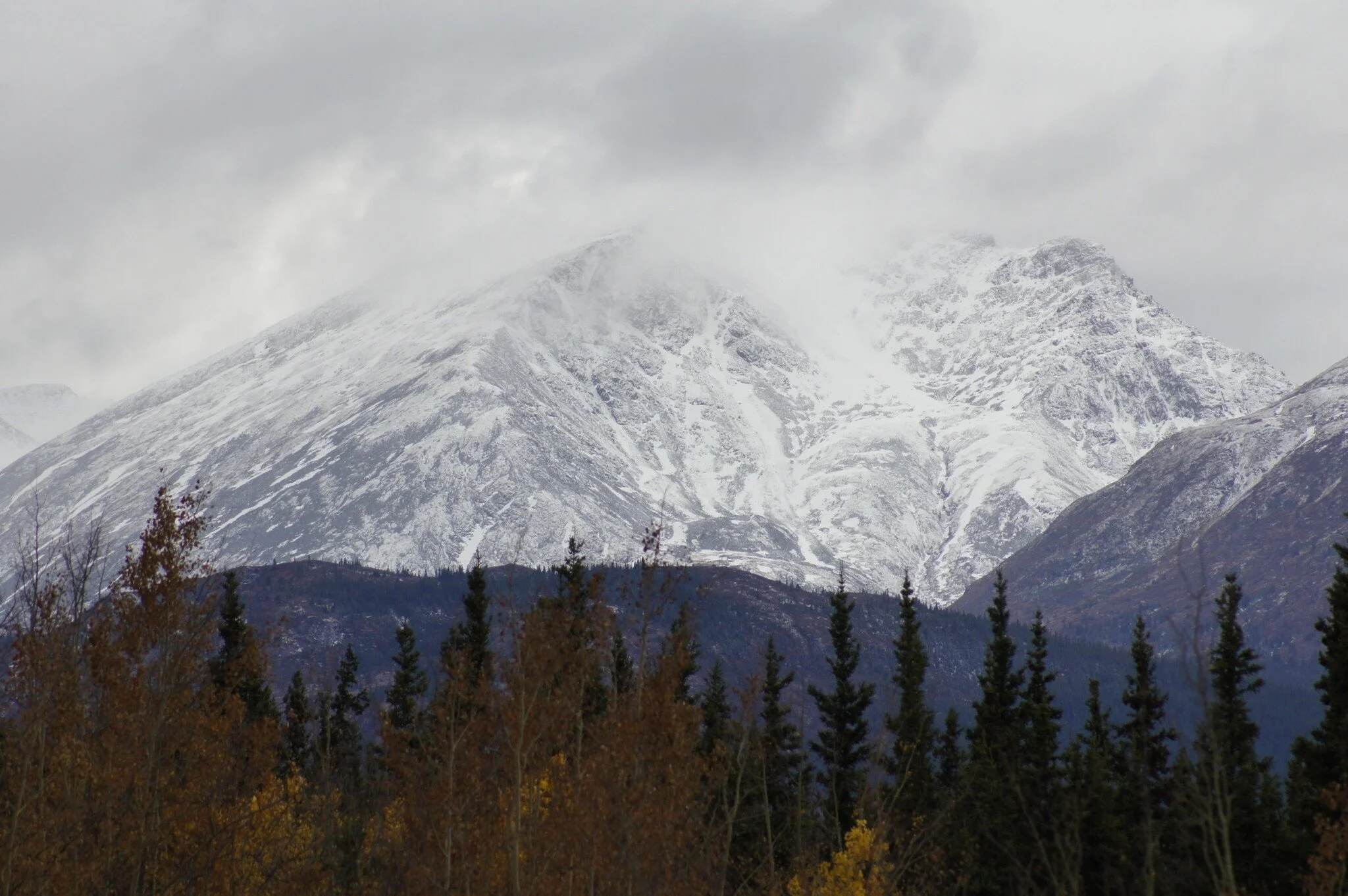
It’s winter in the Yukon, north of the Arctic Circle. Out in the middle of snow and ice, a girl—not much more than 18—stands on a sled that’s being pulled along by a team of huskies. They’re moving fast, they’re about 70 miles from home base, and the only thing controlling them is the girl’s voice. Without reins, she has to trust that the dogs will follow her commands. The only backup option is an emergency brake, and it doesn’t always work.As the sled rounds a river bend, a brown, antlered mass suddenly obstructs their path. It’s a moose, and it’s charging at the girl and her team. The dogs misread the situation and, thinking the moose is dinner, they run faster, staying on the same course. The girl falls back on the emergency brake, but the dogs are too strong for it to do any good. In that moment she realizes there’s nothing she can do—unless the team has some bizarre stroke of luck within the next few seconds, they are going to crash into this 800-pound animal, and she is going to die. But at the last second the moose veers, missing the girl and her dogs. They’ve escaped—just barely—and they continue with their run.This is one of the stories that Bathsheba Demuth told me when I spoke with her earlier this semester. For any literature nerds out there, Demuth is named after one of the main characters in Thomas Hardy’s Far from the Madding Crowd. She’s an Assistant Professor of History at Brown, and she’d probably hate that I opened this article with such a dramatic tale—it’s the story, she says, that her husband makes her tell at dinner parties. She’ll rarely bring it up on her own, partly because her experience in the Yukon marked such a meaningful time in her life.A Brown alum herself, Demuth said that she did not talk much about her time in the Yukon when she first came to college—she “didn’t want to use it just as a piece of social currency.” While remnants of this sentiment seem to have carried over into Demuth’s adulthood, there was another element to her earlier reluctance: the challenge of translation. “It took me quite a while, years I think, to actually figure out how to articulate it [that experience] to people who hadn’t been there [in the Yukon],” explained Demuth. Nevertheless, she was more than willing to tell her stories during our interview—an incredibly lucky thing for me, as she had no shortage of meaningful knowledge to share. I hope I do her justice in retelling it here.One gap year, then three After graduating high school in the “cornfields of Iowa,” Demuth found herself entirely uncertain about what she wanted to study. Determined not to let the beginning of her college education go to waste, she decided to take a gap year and planned out a huge trip, with stops spanning the globe. First on the list was a village in the Yukon called Old Crow, and after about six weeks of living there she didn’t want to leave. Moreover, instead of staying in Old Crow for just one year, she ended up staying for three.But even though Demuth did fall in love with Old Crow, her relocation was far from easy. The culture was a lot different from what she had expected: Old Crow is isolated, it’s tiny (Demuth recalled that Keeney Quad, her freshman-year dorm, had about three times as many residents as Old Crow), and its people lead a way of life entirely different from that of Demuth’s fellow Iowans.
 The vast majority of Old Crow’s residents are members of the Vuntut Gwitchin First Nation, an indigenous community. Demuth stayed with a host family that also belonged to the First Nation, and her job was to take care of the their dog team. She had a lot to learn, and she was met with one surprising challenge: “The way that people understand what knowledge is and what authority is and how these things are transmitted just work very differently,” explained Demuth. In other words, learning takes on a very different form in Old Crow.Growing up, Demuth had relied upon questions as critical tools in gaining knowledge, but in Old Crow she found questions to be “completely taboo.” Instead, you learned through observation and experience, by watching others do things and then trying them out yourself. When Demuth arrived in Old Crow, it was the start of hunting and fishing season, and she realized she knew absolutely nothing about any of the relevant skills. Acquiring them involved “a lot of basically just looking like an idiot,” but in the end she found it exceptionally rewarding.Mushing huskies
 Demuth’s main gig during her time in Old Crow involved “mushing huskies”—the syllable “mush,” by the way, is pronounced as if it rhymes with “lush,” and not as if the vowel sound approached “oo.” Essentially, “mushing huskies” refers to the task of tying between 6 and 16 dogs to a sled and then running them for anywhere from 10 to 100 miles at a time. Demuth’s host family owned around 35 dogs, and she would rotate the members of the sled team, as well as their configurations.She also took care of the dogs, feeding them, cleaning up after them, and making sure they had fresh hay in their houses. All of this was incredibly important, because in order to run the dogs effectively—and Demuth was running them every day—she needed to build their trust. If the dogs—especially the two lead dogs—didn’t listen to her, she’d have big problems. Because the person who stands on a sled pulled by dogs doesn’t have reins or any manner of physical control, Demuth had to rely on voice commands. “If you’ve ever had a dog,” she noted, “you’ll know that this is not a foolproof system.”Demuth recalled going home for Christmas one year. She was only away from the dogs for two-and-a-half weeks, but when she got back to Old Crow they were unhappy with her. “It was like I had violated their trust by leaving and they wouldn’t have any of it,” Demuth explained. “We went out for a run, I would say ‘left,’ they would go right, I would say ‘stop,’ they’d go faster.” It took about two weeks for the dogs to get over her brief absence and start listening to her again.But there were also incredibly rewarding aspects of Demuth’s time with the huskies, who absolutely loved to run. When the first snowfall of the year hit, they'd start howling away, knowing that it meant sledding season was about to begin. Considering how much dogs love to run, if the human they are pulling falls off the sled, there’s always a decent chance they won’t stop. If there's less weight to pull, they can just go faster. But Demuth recalled a time when she did fall the sled—and got injured pretty badly. She flipped over on the ice and the sled’s snow hook, a kind of emergency brake, fell out and hit her on the head. Luckily, the dogs stopped. “They knew that something was wrong, and that I wasn’t just horsing around.”On revisiting: rapidly changing landscapes
 All of this got me wondering: with the climate changing, what’s happening to the place that ended up being so formative in Demuth’s life, and where so many others still live? What will happen to dog sledding, which Demuth says she seriously misses? While global warming has serious consequences worldwide, in the Arctic its effects are accelerated to the point where you can actually see dramatic changes in the landscape.Last year, Demuth took a trip back to Old Crow. She and her host father headed out to a well-used, centuries-old camp where she used to run the dogs frequently. It was a place she thought she knew really well. But this time, as soon as she stepped off the boat that had taken them there, she knew something was wrong. Noticing her puzzlement, Demuth's host father turned to her and said, “You’re confused because the lake is gone.” He was right. Back in Demuth’s dog-sledding days, there had been a lake right near the camp. Now, because of changing temperatures, the lake has disappeared completely. The permafrost surrounding it melted, the water drained out of it, and then shrubs and other plants filled in the empty space. All of that happened in 15 years.While geographical changes are perhaps the most visually dramatic consequences of global warming, Demuth emphasized that there are other, more subtle problems which may be more difficult to face for people living in the area. Animal migration patterns are becoming unpredictable, posing serious challenges during hunting season. In Old Crow, caribou hunting is vital not only to the food economy (it’s incredibly expensive to import food, so hunting caribou is necessary for survival) but also to the cultural economy. Noting that she did not want to speak on behalf of Old Crow’s residents or the Vuntut Gwitchin people, Demuth did mention that the people she spoke with during her last visit seemed really scared about what was happening to the land and wildlife around them.Beyond Old Crow, Demuth pointed out that there are coastal communities in Alaska preparing to evacuate. Before temperatures started heating up so drastically, sea ice had protected the coast from erosion. Now that a lot of that ice has melted, the areas’ inhabitants are quite literally losing their homes, and they are losing landscapes with which they have very special relationships.After hearing Demuth talk about how well she’d gotten to know the geography around Old Crow while running the dogs, this last point really hit home. When she’d described what she loved so much about her three years in the Yukon she’d said, “It wasn’t just that I was learning in a beautiful place, it was that I was learning to live out in it all the time.” Now, imagine that you’d grown up living and learning in a place—that you’d grown up learning that place—and all of a sudden, you don’t know it anymore. Just like a dog runner’s relationship with her team can determine whether she lives or dies, those are some really high stakes.Images via, via, via, via, and via.