
Environmental Studies hosts forum on new track for Environment and Inequality
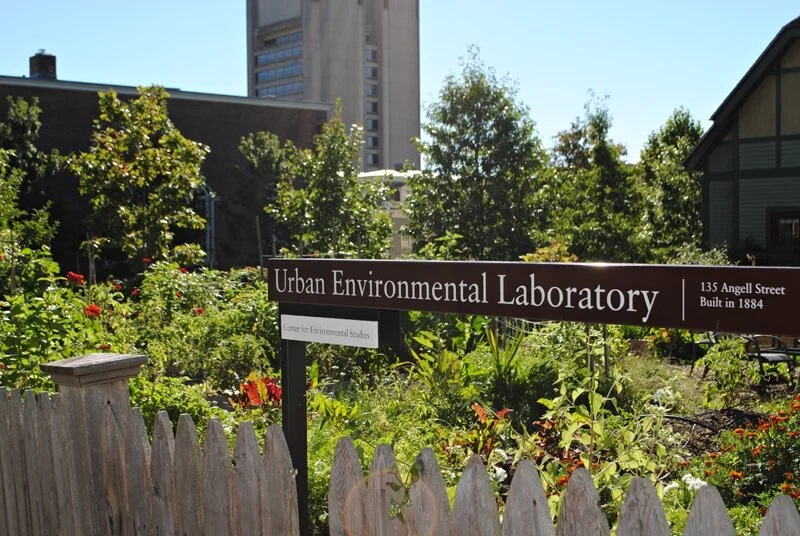
A forum on Thursday intended to consider a new track in a department turned into a discussion about how the study of inequality should be incorporated more broadly into Brown curriculum. The Institute at Brown for Environment and Society hosted a forum on Thursday for concentrators in Environmental Sciences and Environmental Studies to discuss a new track in the department dealing with justice and inequality.Currently, the Environmental Studies concentration is divided into four tracks: 1) Air, Climate, and Energy, 2) Conservation Science and Policy, 3) Land, Water and Food Security, and 4) Sustainability and Development. The push for a new track addressing race and inequality comes from a history of students asking for more discussion about social justice to make departments more inclusive as well as pressure respond to the Diversity and Inclusion Action Plan.Introduced in February, the DIAP is an initiative to address the lack of inclusion of historically underrepresented groups and diversity among faculty and students. As part of the plan, each department is required to create its own proposal to address diversity and inclusion on a micro level. According to one Environmental Studies concentrator, the department has a long history of student activism to include more historically underrepresented groups on to the faculty, and to generate opportunities to take classes that explicitly discuss the connection between environment and race. Students in the department have drafted their own list of demands for Environmental studies, which was part of the impetus to develop a new curriculum.The forum was intended to be a discussion about the specific courses that a committee of faculty and students selected for the Environment and Inequality track. However, after showing a tentative outline of course options, students began to question the department’s approach to the issue. One concentrator immediately pointed out that the new track only replicated the Sustainability in Development track and added two electives that dealt with inequality. Another student asked how the concentration could effectively deal with inequality and race without a higher number of faculty of color. However, those who raised criticisms also added that they were committed to creation of the new track. The faculty in the room countered that they are in fact seeking diverse, new hires, but due to the small size of the department and the bureaucratic hiring process, it will take time to make responsive changes.Students were also concerned that the proposed new track would have little impact in addressing race and inequality. According to one concentrator, students in the department have felt that the new track is more of a symbolic gesture than an actual attempt to address inequality. In order to develop a meaningful concentration and not just a few extra courses about race, the design of the track should include a specific section about inequality, just as tools and analysis have specific section, they argued. Ethnic or Africana studies should be requirements for the same reason Principles of Economics is a requirement: to provide students with a framework for thinking about environment.As the conversation surrounding diversity and inclusion on campus grows stronger, there is a unique opportunity for students to make their voices heard. One environmental studies concentrator noted that students are taking advantage of the momentum created by the DIAP. The conversation surrounding this concentration sheds light on the question of how inequality should be addressed and taught on campus. Rather than throwing in a few extra courses, faculty should work to include inequality as an essential framework in a number of departments. Images via