
Black Power 50th: Elaine Brown @ Brown
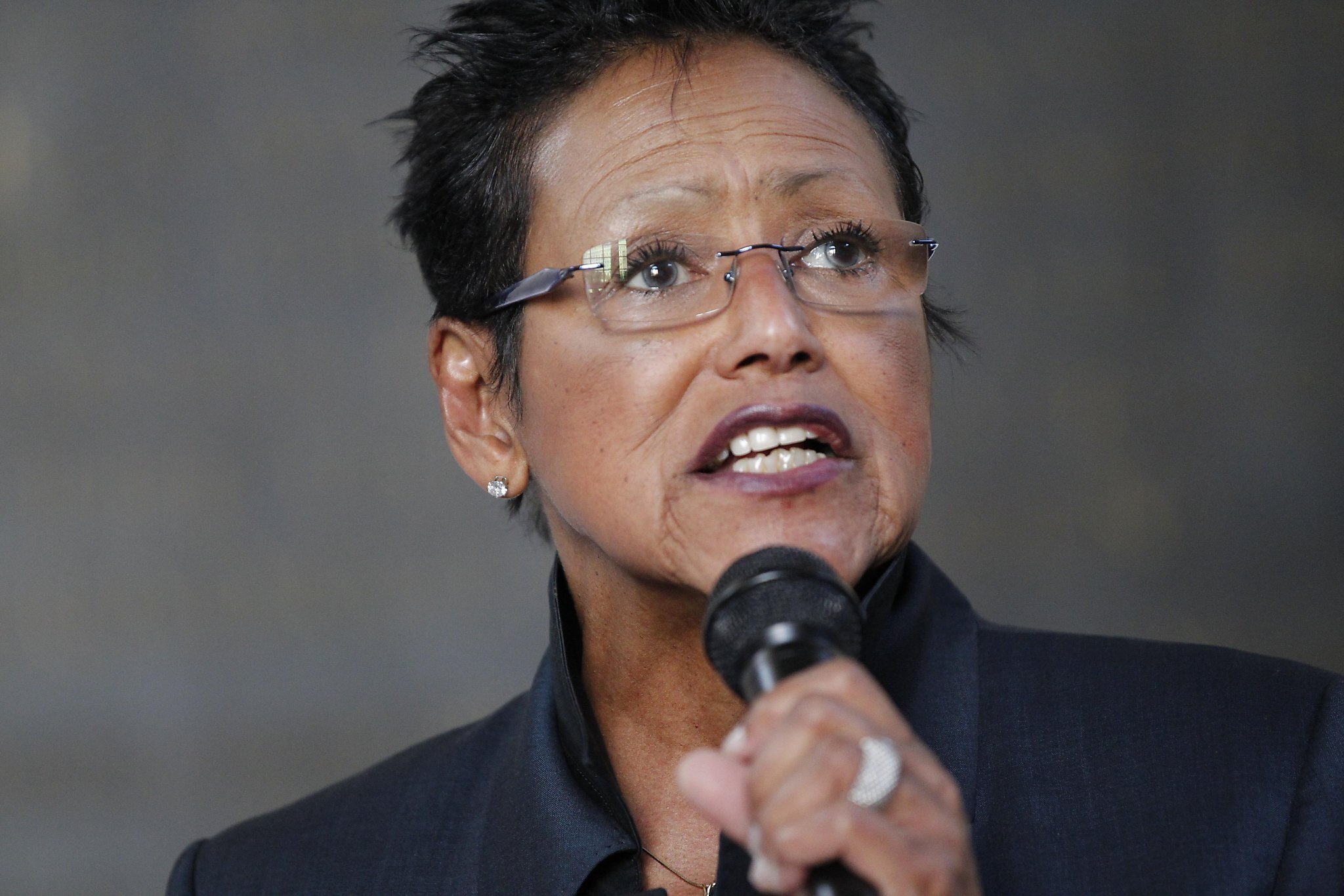
On Saturday evening, fifty years after Stokely Carmichael introduced the term "Black Power" in Greenwood, Mississippi, former Black Panther Party Chairwoman Elaine Brown stood at a podium in LIST 120 and made it clear that she was not happy with the nation's trajectory.Elaine Brown, a resident of Oakland, California has throughout her life been a writer, singer, prison activist, and, most impressively, the Chairwoman of the Black Panther Party from 1974 to 1977.The Black Panther Party was a revolutionary black nationalist organization that served to combat racism in the United States. Black Panthers have been called many names and have been subjected to much criticism and violence over the years. Former FBI director J. Edgar Hoover called the party "the greatest threat to the internal security of the country." But in spite of countless unfounded and racially-charged remarks, the Panthers have improved the lives of countless Americans by challenging police brutality, as well as by helping Black communities by instituting social programs such as Free Breakfast for Children, schools, and health clinics.The main theme of Brown's talk was "Affirming Yesterday, Today, and Tomorrow." Echoing the words of Dr. Martin Luther King, Jr: as a nation, where do we go from here?"In order for us to know where we have to go, we have to know where we are," Brown explained. On the state of the nation, she had much to say about the problems that faced Americans today.
On greater awareness of police brutality, and the resulting backlash: “We see a number of police murders of people of color, mostly Black people, and we see protests all over the country. But these things are often countered by people saying, you know, we’re talking about the police killing, but what about all these gangsters in Chicago and all this Black on Black crime?”
On Wall Street: We [have] brokered a number of systemic changes so that we no longer have social programs and what social programs there may or may not be are being privatized every day. We blame the victim for the crime, we say that people are poor because they’re lazy, or that there are are no poor people, but if they are poor, there’s something wrong with them, some self-inflicted wound… [That’s] what I call a social Darwinist cesspool where you can sink or swim, but that’s the way it is.”
On the hot topic of the 2016 Presidential election: Brown was adamant that neither of the two major candidates had her support. "We are choosing between a racist, ignorant capitalist named Trump and a warmonger who supported the very legislation that has led to mass incarceration named Clinton," she warned.
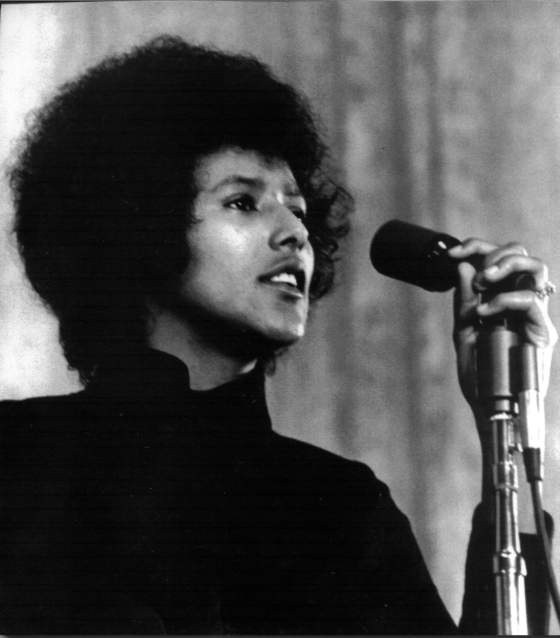
She led the audience through a history of Blackness in America, focusing on the injustice beginning with the true "breakdown of the Black family"-ripping apart African families to be brought to the United States as slaves. "Where are my 40 acres?" she quipped, referring to the land promised to her ancestors under a short-lived post-Civil War agrarian reform.
Brown, however, was not interested in merely recapitulating the problems that were mounting against the lives of Americans, especially Black Americans. She wanted to offer real solutions and ideas to continue the Freedom Movement that the Black Panther Party believed in in a real and effective way, to inspire young people to make differences in their communities.
In one of the most poignant moments of the evening, a student from Brown's own Alpert Medical School told her story as a Black woman in medicine. People often assumed she was studying to be a nurse despite a prominent name-tag reading otherwise. People did not appreciate the late hours she spent studying just to improve the lives of others; people would not ask her questions about her research, simply because of the color of the woman standing in front of the poster.
"Get away from trying to prove your worth to people that are not worthy of proving your worth to," Brown advised. "I'm not looking for your blessing because I don't need you to validate me. You don't need anyone to validate you. You already know you're dealing with a racist society, so this is not shocking. Who are they? They are white people."
Brown stressed the importance of using every resource available in one's own community, no matter how small. She encouraged the creation of programs like the Food Recovery Network, where all of the extra food from events and dining halls were given to people in need rather than simply being thrown out. Brown students, she said, were equipped to vastly improve the lives of local children--after-school tutoring, taking them on trips to pools and skating rinks, simply being there as mentors and educators.
"There are people yearning for a better life, but not necessarily thinking that there is something systemically wrong," Brown explained. Ultimately, it is the responsibility of people who understand the challenges that face Americans of color to make changes in their communities and fight for the change that will strengthen them and grant them the opportunities they need to succeed.
