
Keynote with John Sculley III '61 at Brown Hack Health
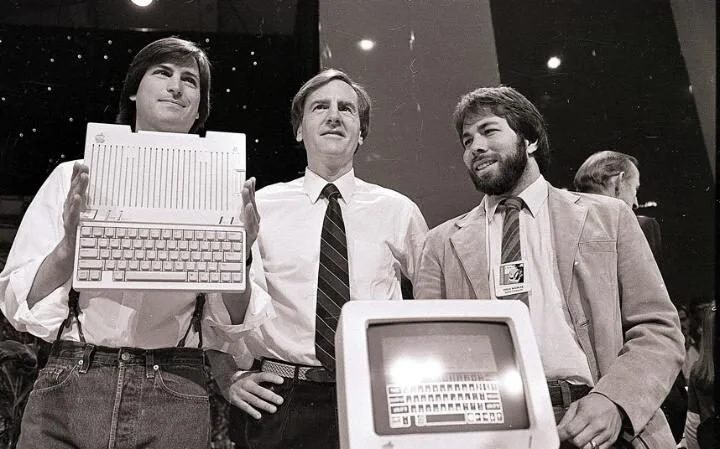
Last Friday marked the opening of Brown University’s first ever health-focused hackathon at the Alpert Medical School. Brown Hack Health is providing the opportunity for individuals specializing in different fields to come together and solve problems in healthcare and medicine. Medical students, engineers, computer coders, and artists mingled at the opening reception in the lobby of the medical school before heading to the keynote speech.John Sculley III '61, former CEO of Apple and former President of PepsiCo, highlighted “purpose-driven innovation” and his experience at Apple working with Steve Jobs.Sculley studied architectural design at Brown University, and one of his fondest memories during his undergraduate days was eating peanut butter and jelly sandwiches at The Brown Jug (alumni, please comment on this).Sculley spoke about his first encounters with Jobs – how they came to be great friends over the course of a few months, how Sculley initially turned Jobs down when he was offered a change to come to Apple. Jobs immediately said, “Do you want to sell sugar water for the rest of your life, or do you want to come with me and change the world?” This line quickly became a famous quote and representation of Jobs’s persona, and it was one of the most surreal experiences to see it presented through Sculley’s perspective. Sculley spoke about Job’s amazing ability to visualize what the world needed when the world didn’t even know what it wanted yet. He was a true creative genius who was able to design the product, and he needed Sculley to convince the world of Apple’s vision. Sculley had initially asked Jobs, “Why do you want me to come work for you?” Jobs remarked that Sculley had done something amazing with PepsiCo back when it was competing with Coca Cola. Because Coca Cola owned the sales at the time, PepsiCo had to own people’s perception of the product. The company did this through the Pepsi Challenge, a commercial that featured a grandma choosing between two anonymous cups and finding out that she chose Pepsi as the preferred drink. This changed people’s perceptions of the product and eventually led to Pepsi’s rise in sales. Jobs wanted Sculley to do the same for Apple.Circling back to the theme of the presentation “purpose-driven innovation,” Sculley talked about how Jobs never brought up money as the driving force of Apple. It was always the vision, the reality, the future. It was a mindset that motivated the company to always strive for a better product. Jobs envisioned a computer that did not seem limited to the technically inclined; rather, he wanted a computer that could be used to create. Steve Jobs was focusing on a noble cause, one of the three tenants for “purpose-driven innovation.” The other two elements of purpose-driven innovation were knowing that there has to be a better way, and knowing to adapt (or disappear).Sculley is now heavily involved in healthcare innovation, which he highlighted as a very pressing issue due to the U.S’s hugely unnecessary monetary investment in healthcare. One direct cause of this is the high expenditures for chronically ill patients that must revisit physicians often. Another cause is the cost of producing and selling pharmaceuticals. Patients are often prescribed an excessive amount of pharmaceuticals that could be reduced by 50%. Sculley co-founded Misfit Wearables and is currently serving as the vice chairman of MDLive, both of which seek to find innovative solutions to these problems.During the Q&A, one of the participants asked Sculley what he thinks the role of the physician will be in the coming years as technology plays a bigger role in healthcare. “I don’t think that the role of the physician will ever disappear, though I do think that technology will play a more important role because they can accurately predict trends from a large amount of patient data,” he responded.Another participant asked about his process of understanding the customer. Sculley really stressed the importance of understanding the customer before developing a business model. He stated that his process always starts with knowing the customer’s problems and going from there.Thank you John Sculley for returning to your alma mater! Be sure to check out Brown Hack Health for more information.Image via.