
SEEED Summit Keynote with Robin Chase
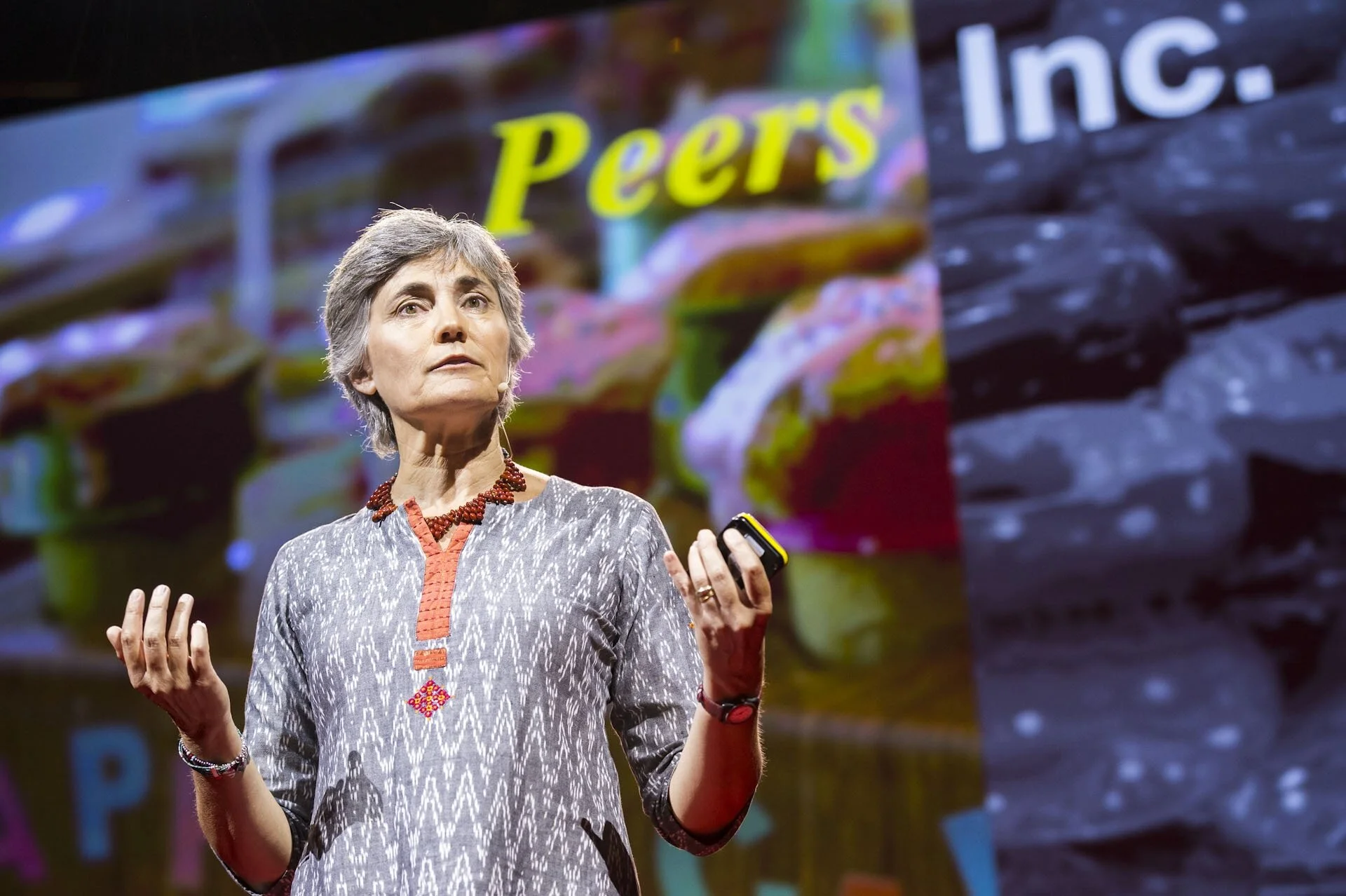
Jointly hosted by the Social Enterprise Greenhouse and Brown, this past weekend's SEEED Summit delivered on its reputation as a leading national conference for social entrepreneurs, impact investors, and community leaders committed to social innovation. This year’s conference theme was "Growing Businesses With Impact" and entailed the exploration of the unique challenges facing a social enterprise at various stages of growth. The Summit closed with a well-delivered lecture by Zipcar's co-founder and former CEO, Robin Chase. The lecture was moderated by Provost Richard Locke, who serves as a professor of political science and public and international affairs. Through private sector experience, Locke has gained respect for his work on international labor rights, comparative political economy, employment relations, and corporate responsibility. Provost Locke opened by discussing Brown's partnership with Social Enterprise Greenhouse and the accompanying entrepreneurship and sustainability-based initiatives that have been designed. He reinforced the University's responsibility to "demonstrate empirically the viability of sustainable business practices that are more just." With the correct combination of evidence, strategy and leadership, Locke noted that "we can actually change business practice and public policy for the good, and in the meantime improves the lives of millions of workers." Locke further elaborated on the motivating spirit and energy that defines Brown's community, and supported its continued partnership with other academic and research institutions, the private sector, and local nonprofits. With no shortage of global problems that demand creative solutions, there exist vast business opportunities that can evolve into successful ventures, including solutions targeting improved water availability, air quality, food quality, and gender equality in early education. These tangible solutions, Locke went on to explain, require not only "enlightened public policy and effective government, but a real commitment...to think creatively and innovatively."The conference closed with a powerful address from Robin Chase. Chase first garnered a reputation as an innovative transportation entrepreneur, and she has gained experience through her leadership in various social sectors. Aside from co-founding the largest car sharing company in the world, Zipcar, Chase has worked on additional international and domestic transportation-related social ventures. She currently resides on the the board of the World Resources Institute, and served on the board of the National Advisory Council for Innovation & Entrepreneurship for the U.S. Department of Commerce. Chase has received awards in innovation, design, and the environment, and was included in the TIME 100 Most Influential People in 2009. She lectures on a range of topics: innovation, entrepreneurship, technology, transportation, cities, and climate change. In 2012, she delivered a notable Ted Talk that you can find here.
 Chase began by discussing the evolving nature of America’s relationship with cars and how a a collaborative transportation economy has emerged. Zipcar's success, she explained, was based primarily off a few key business principles. First, the company leveraged excess capacity in the economy, allowing customers to simply pay for the exact amount of a desired product or service. Second, the company was built on a participatory platform. Zipcar draws in customers as peer collaborators, rather than just as consumers. With a rise in collaborative social ventures like lending clubs, crowdfunding, and online open educational courses, car-sharing represented an untapped concept, yet was based on the same growing consumer trend of product and service sharing that other innovative ventures have harnessed.In her recent novel, Peers Inc., Chase discusses modern efforts to capitalize on this collaborative movement that allows for new social ventures to expand with low costs. Her book describes how growing ventures can build on this peer-to-peer platform in a sea of excess capacity. In closing, Chase discussed the new business trends of slicing, aggregation, and open-data. This slicing, or pay-as-you-go, concept is illustrated by Zipcar's model, while an aggregation model through a common interface was pioneered by Airbnb. Finally, opening up data to to discover untapped social and economic value has been reinforced in studies that approximate the potential value creation enabled by this movement to be $3 trillion, annually. As the final SEEED Summit keynote lecturer, Chase displayed her evolving interests and deep passion for social innovation, while evaluating its incredible potential for positive societal impact at all levels of the global economy.Images via, via, and via.