
A chat with UCS presidential candidate Kevin Garcia '18
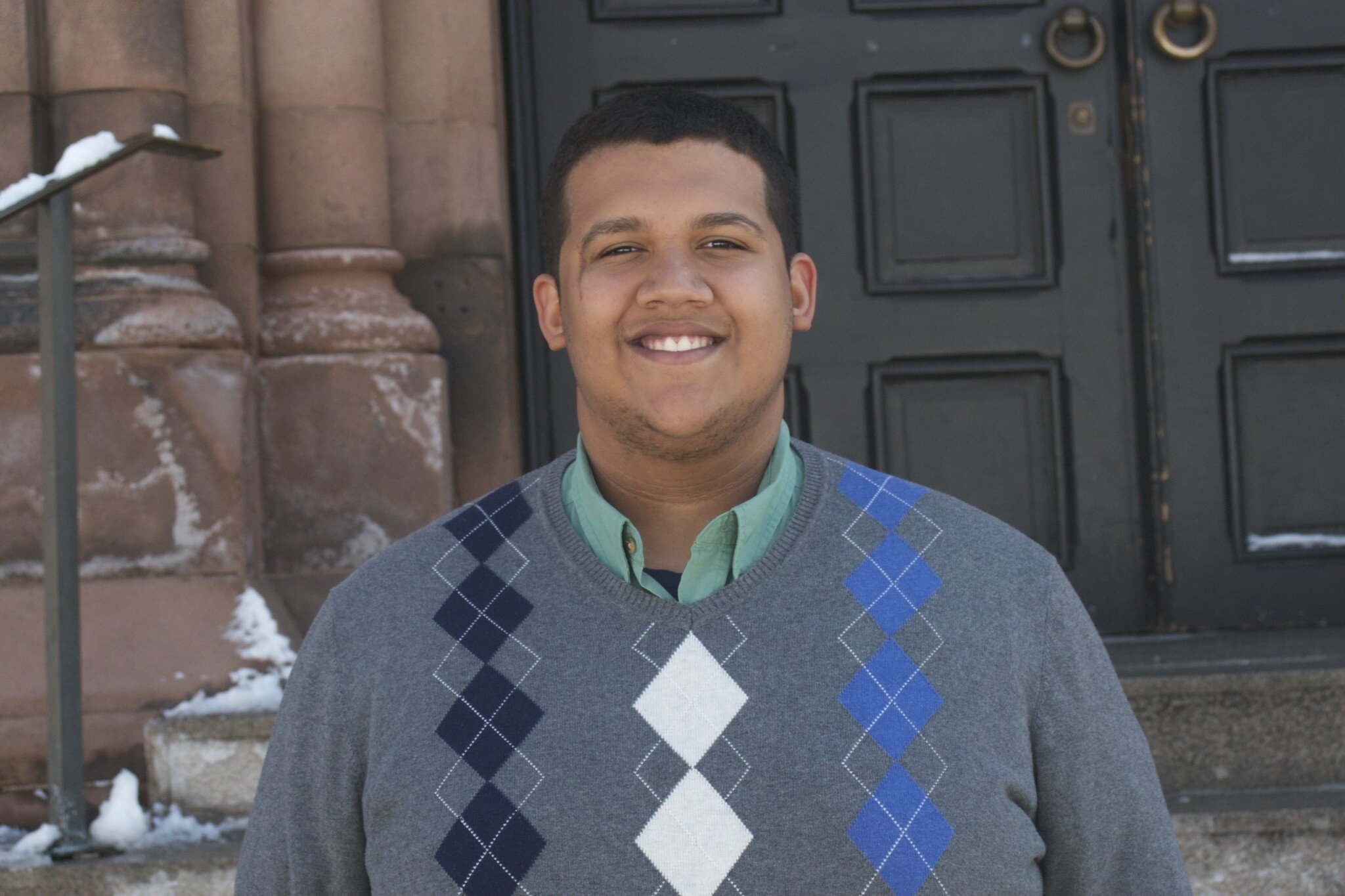
Blog: What differentiates you from the other two candidates?KG: I really think that the internal experience is invaluable. As much as an outward face the president is–in like talking with administrators and groups–your vision needs to be coupled with really good vision of what’s going on on the inside or you can get caught up in a bunch of logistics. I feel like the last two years, being able to work really closely with members of the Executive Board, I have a really good handle on how to combine that vision with getting day to day things done. And I think that will be really useful to be able to hit the ground running. I can kind of avoid that learning curve and get going. In addition, I know where UCS errs and where it will be able to do its best. Like last spring, when we were having the all campus Title IX discussion, I think that was a very powerful moment–when UCS was the best tool for others. B: No one is able to accomplish everything you run on. Is there anything in particular that you want to privilege in your platform–the most important, the most dear [issues] to you?KG: I know the things that are very urgent that I will give my immediate attention to. Like the departmental diversity action plans. Those are going, there is really no time to wait to work on those. It will start by working with DUGs and what-not…it’s really easy to just go and have departments check the boxes on whatever they ask for. There was kind of this leveraging point by the provost to be like, “Hey, if you don’t follow through on this, we will freeze your hiring.” But honestly, as cool as that is, there needs to be like an actual person there who knows what they are talking about, to be able to evaluate these plans. I know right now it might be falling on the shoulders of one or two administrators, but structurally, that definitely isn’t going to be enough for the amount of departments they have. And them being able to internally kind of look at the demographics of each department and be like, “Why aren’t more people going to this department from certain backgrounds?” Being able to critically analyze these questions is definitely really important. And making sure that it's like across departments, making sure that STEM knows they are just as responsible as, like, American Studies. Just because that is happening fast, and it's something that is urgent, definitely makes it high on my docket. Perhaps something that is closer to my heart, something that I’ll be out of the gates working on is getting the summer earnings expectation gone. I listed having multiple SEW waivers [on my platform] as a sort of intermediary step but the reality is that there is still going to be anxiety from students who are in the lowest income bracket about, “Alright, how am I going to get books in the fall? How am I going to be able to eat?” Things like that. “When I get back home, will I be in the position where I have to work for my family?” And I know that that is a very, very real thing. So that is something that would be really at the front of my docket as well. Like you said, it’s really easy to build this expansive platform but I think that the experience that’s there and being able to work with UCS so heavily the last two years–I will be able to really not lose sight of those things. B: How do you see UCS fitting into student activism and tense dialogues currently taking place on Brown’s campus? KG: I’m going to answer that by saying that I recognize how important conversation can be, I think in a lot of the discussions, people have put forward demands [and] been very clear about what they want. It’s that time for turning discussion into action. I know that a lot of groups have made certain demands that are very important to their success here on campus. I think the best way to handle the increase of student activism on campus–at least visible student activism–is to be able to just engage with those people on the ground. It is a very similar conversation to the one we had last spring. Being like, “How can we leverage the general body that we have, how do we make them informed about these issues, how do we make sure that like they like understand where you are in your own humanistic experience and, like, let's go organize and get this done.” How are we mobilizing, how are we strategizing? Conversation is always important. A space should serve as having people come in who know what they are talking about and being able to really educate the general body as well as possible to make sure we’re on the same page–that is really, really important to make sure that we are accomplishing what we want to and we end up in those types of meetings. So, yeah, UCS can facilitate those conversations and can bring in people from the ground to general body. But, ultimately, the most important step is the action. Mobilization on the ground, strategizing for meetings, things along those lines. B: In your two years of experience with UCS, have you found there to be any structural barriers in the way that UCS is organized? If so, do you think your internal experience will equip you to navigate those barriers or do you have plans to reconfigure those barriers? KG: I know where things can get clunky and I’m more than willing to change those things. I think one of those things is our student activities categorization. All the clubs go through UCS and then we have a general body sit there and decide. That’s a big chunk of time when we could be talking about lots of other things, so being able to externalize that–make it as separate a process as possible–that’s one of [bigger] blocks in the road for the general body in getting things done that I think could be shifted towards having a different process altogether. In terms of anything else, just being able to make sure that general body members individually are able to be engaged and are expected to be engaged, to bring problems to the floor so that they are actually critically analyzing things on campus that are happening around them. I think it’s very easy to stumble upon UCS [at the beginning of the year] and be like, “Oh, cool, student government.” Many have high school backgrounds with that and fall into that lull of playing student government. But, to me, we are here to make change. I expect you to at the beginning of meetings bring forth considerations, especially if you’re asking yourself these questions. So setting expectations in the room is another big thing so that we can actually utilize the body, instead of just having an executive board. B: How have your individual experiences, both at Brown and through your cultural background, colored your vision of what UCS can and should be? KG: I identify as a first-generation student. I am a student of color on campus. I know what it’s like to be let down by campus in some aspects, especially on those margins of, like, “What am I thinking about for the summer? How is that shaping me? What kind of pressure is this putting on my family?” Things along those lines. So I’m very, very aware when the picture that was painted for you at ADOCH is not quite a reality because of the ways you interact with campus. You can see that through a lot of things [in my platform]. I mention [hiring] a First Generation Center Director on there, along with training professors. Through [my role on the executive board] I’ve been able to put a lot of emphasis on what we should be looking for when we hire professors, that awareness and ability to deal with situations where you don’t necessarily have a homogenous classroom of people from advantaged backgrounds. They should be able to deal with that. So it’s all around my platform. It’s incredibly important–that combination of the experience and that awareness will be extremely valuable in terms of being able to get things done and being passionate about the things I put forth. B: What do you love about Brown? And how do you see yourself, as UCS president, building on those things? KG: I love the open curriculum. I’m a double concentrator in Political Science and Economics. I love that I’m able to dabble around in things that have nothing to do with that and I think it makes me a more whole student. I like having the total option to kick it on the weekends, or if I really want to, I could also go out. But there are some issues there, considering university policy, that I have my gripes with. B: Like what? KG: The graduate student patrolling policy. I know the timing around which that hiring process went. It was something that went really, really fast. And while it was well-intentioned–it was very, very well-intentioned–I don’t think it is very supportive for any social group. I think it’s a really big issue considering the speed at which this happened, knowing they probably didn’t get a huge amount of training, knowing that their goal is to call DPS. And DPS is sort of forced to act in a very different role than if they had stumbled upon you independently. That’s very much an issue and might actually create safety issues, especially for the younger population on campus. But continuing on what I love about Brown. I do have that option to interact socially as I wish. The variety of different vibes you can get around campus are really, really cool. And I really enjoy that. B: How has your involvement with things other than UCS shaped your candidacy? KG: I have been very involved with Brown Democrats. I’m on their executive board as the communications director. And I am a Rhode Islander, so I get to interact with Rhode Island politics in a very particular way through that. I am also in Brown Political Review as their social media director, so I say that if I’ve gained anything from those clubs, it’s really the ability to disseminate information to the rest of campus. And I’ve gotten a lot of practice with that. In addition, particularly in my work with the Brown Dems as a Rhode Islander, I know how communities view Brown. I’ve been able to talk to not only people who hold positions in local government about how they view Brown but more I bring that as a person. By constantly interacting with local politics, I’m hyperaware of how people view Brown from the outside, which a lot of people are lost on. Being able to bring that extra level of awareness is really important, I think. B: Can you speak to how having the local perspective has shaped your view of Brown? KG: So here I am. I somehow managed to spend another four years in this state, which I was surprised about. When I step into the Ratty, for example, and I hear the workers speaking Creole, there’s even that separation there. Many people won’t even know the language they’re speaking. When does it mean when we talk about going off-campus or going “off the hill”? It makes me very, very aware of our decisions as a university–like how we interact with housing, where communities are moving as a result of our continual growth. While it’s really, really important to have enough space on campus and to provide additional permissions for people to be able to go off-campus, especially as we try to grow our population, we should be very aware of how that interacts with [Providence citizens]. Or dining hall changes. When I talk about that on my platform, I am also talking about the fact that we have union workers, people who are from Providence, employed here at Brown. Brown is one of Rhode Island’s largest employers, by far. And being able to make sure they are properly taken care of as we undergo a possible transition in our dining halls. Having that extra level of awareness is important to making sure we have that responsibility as an employer and keep the good partnerships with the community. B: Is there anything you want to add?KG: A platform is 350 words. And there is a lot of information I have gotten to gather over the last two years that don’t necessarily fit onto a single piece of paper. So things like–when I talk about Title IX training, what exactly does that holistically look like? It goes a lot deeper than the platform and I think I’ve gotten a good chance to interact with these issues in depth and think I can provide depth [as president] because of those experiences.