
IFF Panel on Gender, Race in Hollywood
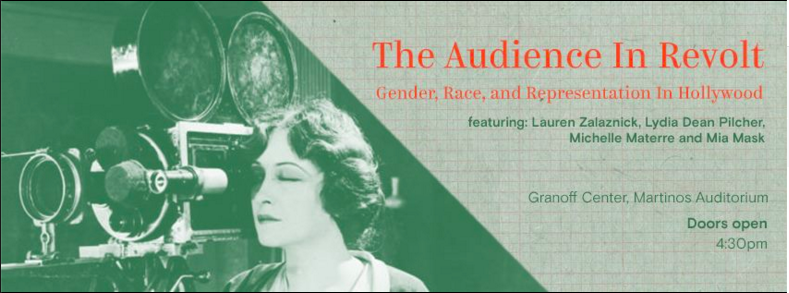
IFF continued on Friday with a panel entitled "The Audience in Revolt: Gender, Race, and Reputation in Hollywood." The event, cosponsored by the Pembroke Center, was moderated by Brown graduate Lauren Zalaznick, a lifelong media executive who is currently the chair of NBC Universal Entertainment and Digital Networks Integrated. The panel members included Mia Mask, a professor ofAfrican American cinema, documentary history, and feminist film theory at Vassar College; Lydia Pilcher, a film and television producer and activist who founded the Women's Impact Network of the Producer's Guild; and Michelle Materre, Associate Professor of Media Studies and Film at The New School whose film series Creatively Speaking features work by and about women and people of color.The conversation began with a discussion about #OscarsSoWhite. Mask noted that "the hashtag was part of a number of things happening" like Occupy Wall Street, the Black Lives Matter Movement, and race riots in Ferguson that shed light on inequalities in the U.S. and gained momentum through social media."Plicher said she saw the hashtag as a consequence of big data which "allows us to look at stats and debunk a narrative." She argued that a "huge shift in the demographics of the U.S" population" had an effect on the traction of #OscarsSoWhite. Since Millennials now make-up 1/3 of the U.S. population, and 42% of U.S. citizens are diverse, their market power has increased and can demand change.Outraged by bias and underrepresentation, millenials are beginning to show they don't care what Hollywood expects, "and that's where the movement's going," Materre said. This shift is made possible because of the "much smaller barrier to entry" to create art and commercial content, Zalaznick added.Mask said that the way in which people are willing to jettison Hollywood aesthetics today reminds her of the 1950s. She reminded the audience of how Hollywood was "hemorrhaging" at that time as it focused solely on producing huge budget musical films that did not resonate with young people. New technology that enables audiences to stay at home and watch movies today provides new competition and servse to further threaten Hollywood traditions.Pilcher pointed to a "radical disruption" in the entertainment industry. Today, international markets account for 80% of American business. She noted how Disney is now focused on making movies targeted for BRIC countries; later, she explained the struggle the company faces in finding story lines that preserve native cultures. She spoke about a film she is currently producing for Disney about a Ugandan girl who proves to be a chess prodigy.Zalaznick then asked the members of the panel why they thought films with majority white male casts and producers were so successful. Materre argued it was due to the fact that Hollywood films have such large budgets and are therefore better positioned to spend money on marketing and reach large audiences. Pilcher who said studios like Disney spend vast resources to become culturally relevant abroad asked "why can't we figure out how to be culturally relevant at home?""You have to talk about the make up of the academy," Mask said, pointing out that it was mostly white men over forty. "They're not going to vote for Straight Out of Compton."When asked about whether the panelists expect to see more and more content made by minority voices, Pilcher argued that studios and corporations needed to promote unconscious bias training. Materre pointed to the disturbing fact that she is currently producing the first ever documentary about black women doctors.In the Q&A session, Mask shed light on a fundamental problem: "it's not just that white men have been directing white male cinema, they're directing female cinema, and racial cinema. There is an industrial bias that women won't direct movies or direct them as well," Pilcher said.An audience member pointed out that there is a bias even within film schools about whose movies are seen as the most successful. "You have a lot more power than you think you do as students," Materre said. She urged Brown students to force the university to make changes to be more inclusive and ensure minority voices are heard and supported just as strongly as majority ones.Images via.