
A chat with UCS presidential candidate Zach Nelkin '17
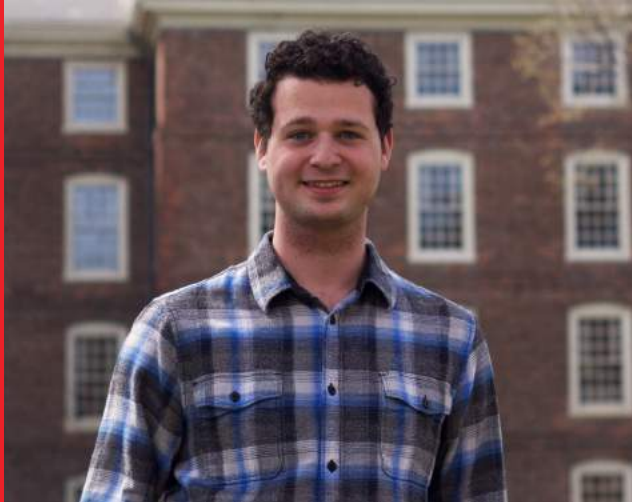
This post is the first of three interviews with the UCS presidential candidates, all of which will be published before polls open tomorrow, Tuesday, April 12 at noon. The polls will remain open until Thursday, April 14 at noon.Blog: Let's start by having you tell us a little bit about yourself.Zach Nelkin: My name is Zach Nelkin. That means carnation. I'm originally from New York, but the rent got too high so I moved to Jersey. I grew up in an orthodox Jewish community and household, and was part of that community until around the time I came to Brown, where I was able to be more secular. I'm a junior. I concentrate in mechanical engineering because I love problem solving and I like math, and it seemed like a great way to combine those two things. On campus I'm a volunteer coach for the Rhode Island Urban Debate League, which is part of the Swearer Center. I've been involved with that for the last two years, and it's extremely rewarding. I love doing that. I'm a member of the planning committee for the group, Stand Up!, and I also do their graphic design together with one other person. I'm a new member and machinist for Brown University FSAE (formula racing), which is awesome! I haven't yet lost a finger in a lathe—good—I'm hoping never to. And I'm also a member of Brown Students for Bernie.B: What do you consider to be the primary role of the UCS President? How much influence does the position have?ZN: So, right now, a lot of what the UCS does goes through the president. A lot of the decisions are very centralized and the general body gets bypassed. I think something that's important for the UCS that we haven't been doing a great job of, is not doing that way. So having the president have a role, but being cognizant of what their limits are and that other people have greater knowledge both inside and outside of the UCS. So, I think the role is really more of working with people, making things that they're working on public, helping organize the UCS in and of itself, but not trying to be the preeminent voice on the UCS, and not trying to have the UCS be the preeminent student group or the conduit for student voices, but to be a partner in every sense of the word, is what is most important about the job.B: Why do you want to be UCS President?ZN: I want to UCS President because it strikes me as somewhat wrong that the UCS is a primarily unelected body, and I think that contributes, in part, to the centralization and apartness it feels from the student body. So, we have to go get a bunch of signatures if we want to run for president, and one of two things happens if you ask someone for a signature: either a small handful of people ask you fantastic, really tough questions about why you're running, or they say, "What's the UCS?" So what I think is important is that we make it so more people start asking us those tough questions, and asking what the UCS can do better for them and what is important for it to be for those people who aren't involved.B: So, what was the toughest one of those questions you've had to answer and how did you answer it?ZN: I think the hardest question I had to answer was about alcohol policy because as somebody who is not personally a member of a fraternity, it's very awkward to speak about somebody else's experience, and the way I answered it was that I am personally opposed to blanket bans on anything. I deeply worry about the problem of displacement to more unsafe venues. So I am opposed to the policy of a blanket ban, but at the same time, I understand that it came from a place where people were generally afraid of the results that came from a survey on alcohol usage. I think there has to be a compromise has to be made wherein more responsibility is given to greek life and interest houses, but with the expectation that they will work towards making sure everyone remains safe and have the resources to make sure that everyone remains safe.B: Why do you believe that you're the best candidate for the job?ZN: I believe that I'm the best candidate because I'm not just talking about what the UCS should be focused on, but also about the UCS itself and its structure, and how those two are related to each other. So, I think that all of the candidates have put forward a lot of really bold and really good ideas. What I think is somewhat different about what I'm saying is that those things can't be achieved unless we change the way the UCS operates. So unless we're actually doing a good job of being representative, it doesn't matter what we say when we talk to the administration. It's meaningless unless it comes from a place of involvement and representation. I think that's something I've talked about in this campaign, and I ran last year and I talked about the same thing. So, if nothing else, I am a broken clock and very consistent on that issue!B: In last week's debate, you talked a lot about the changes that need to be made to the structure of UCS. What are the most important changes you want to make and how will you go about making them?ZN: I think that the most important thing is that the UCS has to be a fully elected body. That can take a million and one different forms. I wrote a draft constitution and it has two electoral systems that the UCS could use, and they're fine, but there's an infinite number of other options. I think the only things that's necessary is that it's elected and that the election is a process in which every vote is counted equally, which seems obvious, but isn't necessarily, and that the ballot is simple enough to be easily understood. There also needs to be enough provided information so that people know what their views actually are. There are a lot of ways to do that, I don't have the perfect one. I think the other thing that's really important is that the UCS be subject to more direct democracy. So, giving people the chance to pass initiatives independent of the UCS body and people being able to vote on the UCS's structure, such that its representation is one that is actually backed up by some kind of consent to be represented. Otherwise, it's just a lie.As far as how I want to make that change, I very much don't want to make that change by getting elected and saying, "Let's do this my way and wrap this up." First of all, that's not possible. Second of all, it's not democratic. Third of all, that's the way to get really, really bad results. I don't think that anything that affects the representation of the students can possible be done through one person, or even a small group of people, without tremendous amounts of outside input.B: I also want to talk about the social justice issues that were mentioned a lot in the debate. What involvement with activism have you had on campus and how do you plan on addressing a lot of the issues brought up in that part of the debate?ZN: My main involvement with activism on campus is through Stand Up!. I helped organize the march that was held this past Saturday. I thought that was a really fantastic and rewarding experience. I had a tiny, small part and a lot of people have done so much uncompensated work bringing these issues to light and making sure they remain in the public eye and pressuring people to make changes who might not have otherwise done so. Those people deserve a tremendous amount of gratitude. Two of the issues that we talked a lot about in the debate were mental health and finance, which is kind of the general category, but more specifically need-blind opportunities for international students, some earnings expectations, the costs of textbooks, and the fact that student workers are not paid a living wage. One thing that I think is really important and should go with those things that we didn't get the chance to talk about is campus accessibility, which goes far beyond just Wilson Hall not having a ramp—it's way more than that. I think that how those things are addressed depends on the issue.For mental health I think that there is a consensus that something has to change so that the next time something horrible happens we don't say, "There's nothing we could have done because we didn't care enough, because we didn't devote the resources necessary to making sure that everybody had the support that they needed." I think the issue with that is taking that consensus and using it to change the policies that the University already has. In particular, the seven session limit and the fact that it creates a stigma around mental health, which only contributes to the problem. A great first step with that was the movement of CAPS to Health Services, which sends the message that actually mental health is health care. Also, the fact that they hired a new director for CAPS and health services who does talk a lot about the need to devote more resources is good. I think the issue there is working together with them to make sure other parts of the University recognize and aid in building up the department, its capacity, its diversity, and its ability to see people quickly or in long-term cases.As far as disability, one really low hanging fruit is door handles. One of the things that UCS is good at is raising awareness of the fact that there exists this massive deficit in accessibility on campus, and it's not just in Wilson, it's all over the campus. It's the fact that not all of the bathrooms have handles and that not everybody is able to take a shower and feel safe. I think that what the UCS should be doing there is talking about it, making it clear that it's unacceptable, even in little details that should be simple fixes.With finances it's a similar thing. In the past, we've run a poll, and we ask people, "Which do you support? Do you support need-blind admission for international students, financial aid for low-income students, or financial aid for middle-income students?" And I actually don't like it that we do that, not because I don't think it's important to prioritize, but because I think that when we do that, what we're actually saying is, instead of standing in solidarity with each other in order to achieve a reduction of costs, which are really putting a huge burden on people, we have split people up into these three competing interest groups. None of them are going to get what they want unless they start working together, not just with each other, but also with members of the staff who are fighting the University's move to make them contractors, or really drive down their wages amidst renovation. So there are two. Even though there's a recognition that cost is a huge issue, there is not necessarily yet a recognition of how many people it actually affects, and the fact that they're all connected to each other. They're also connected to other things like the way the University deals with its staff and the way the University handles its investments. They're connected to the way the University deals with the city of Providence over its contribution. Again, something that's really in the ability of the UCS is raise the awareness that those things are connected and to work with those different groups to bring them together to start articulating a set of principles and demands that start moving the ball forward on change.