
It comes down to a vote: students at the polls, turnout barriers, and the Beastie Boys
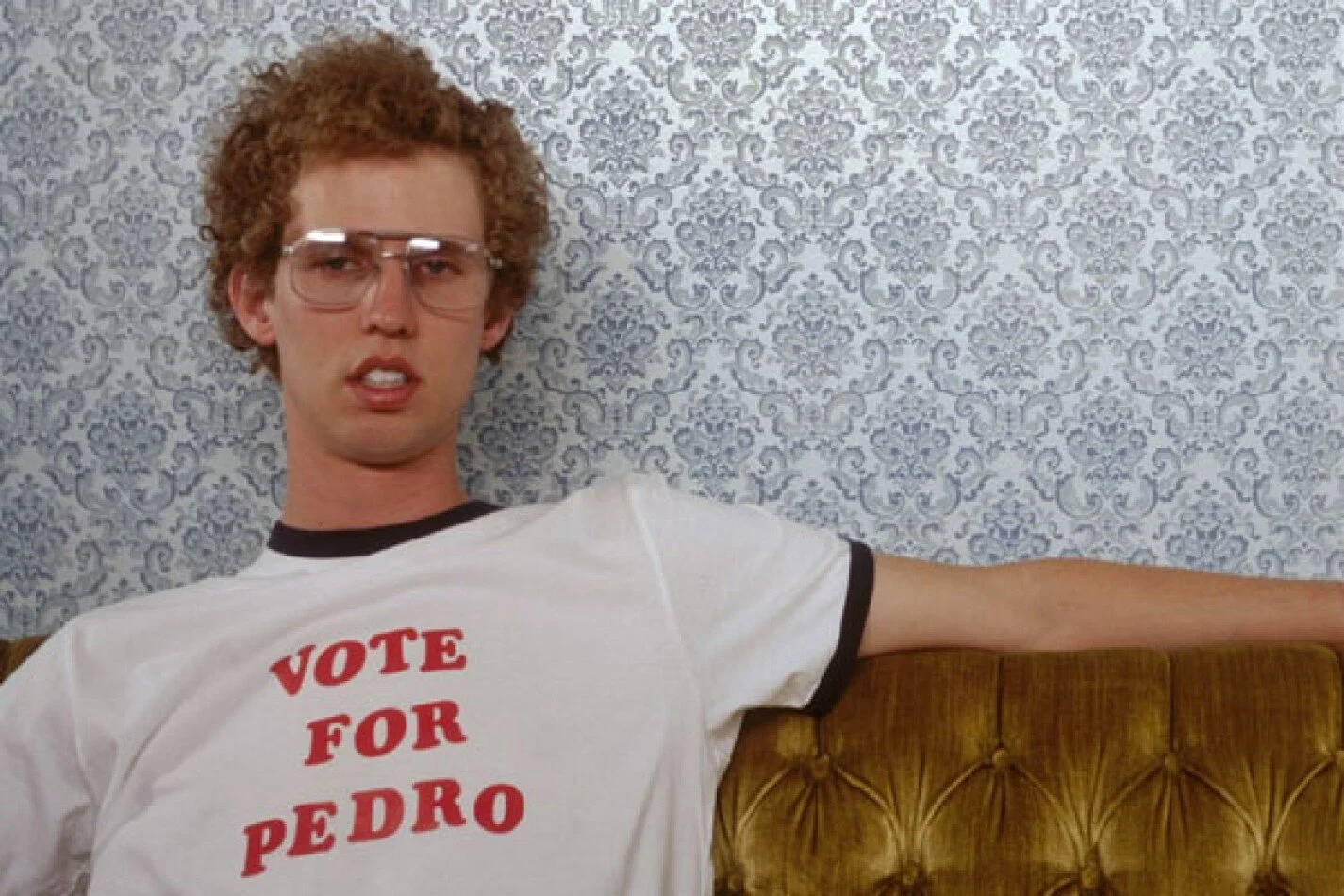
You're sitting in your third grade classroom and the teacher says that there are two choices for which book you will read next. "Put your heads down, and vote for whichever you prefer!" she says. You put your head down, but cheekily look around to see what your fellow tiny people choose. Sometimes, the teacher lets out a sigh of frustration. "We need to try again–it was a tie, and not everybody voted," she says.For many of us, the importance of democratic decision-making–especially its relation to U.S. values–is something we were taught in elementary school. Unlike when you were eight years old, however, your vote now decides more than just what candy you'll eat on Friday or when you'll have recess. Votes not only elect presidents, but senators, congressman, and a whole slew of other representatives. And let me tell you, the issues are certainly more complex than recess.What does voter turnout look like? Only around half of eligible adults tend to vote during general elections. Compared to other developed nations, this number is shockingly low. According to PEW Research Center, the highest-ranked countries, including Belgium, Denmark, Australia, and Sweden, had turnout rates of 80% or higher in their most recent national elections, compared to 53.6% in the U.S.'s 2012 general election. Other countries, including France (71.2%), still led the U.S. by a significant amount.PEW does note that the issue is complicated: a few of the highest-ranking countries have compulsory voting, and some countries have turnout rates that vary drastically, while the U.S.'s hasn't changed much over the last four decades. But many also have governments which actively support voter turnout, using programs such as automatic registration. As for the proportion of voting-age citizens registered to vote, the U.S. again trails many of its counterparts, with only 65% of the population registered.There are other important facets of voter turnout in the U.S. For one, turnout in primaries and midterms tends to be far lower than turnout in general elections. In another article, PEW notes that as of March 8th, 11.7% of Democrats and 17.3% of Republicans have shown up to vote in this year's primaries. These numbers are not abnormally low, either–in fact, they show a significant increase from the last primary season. As for midterm elections, PBS explains that overall turnout in 2014 was only 36.4%, the lowest it has been since World War II.Moreover, voter turnout shows notable variation among different demographics. Asians and Latinos, for example, tend to have significantly lower turnout rates than non-Hispanic black and non-Hispanic white voters (in the last presidential election, the turnout rate among black voters actually exceeded that of whites for the first time ever).The age range which you and your fellow Brunonians fall into also tends to have extraordinarily low turnout, although it does depend to some extent on the election year. An article in the New York Times explains that in 2008, citizens between the ages of 18 and 28 had a turnout rate of 51%, while those between the ages of 44 to 62 had a turnout rate of 69%. The piece also points out that low youth turnout is not unique to our generation, despite the slew of thinkpieces disparaging millennials.Why don't we vote?An op-ed in The Washington Post cites research that shows student-aged citizens may not vote because they're disillusioned with the government and don't trust politicians to make the right decisions (if only Tom Hanks would run for office). One poll suggests that a third of 18-to-29 year olds believe their vote doesn't matter. And while it's true that one vote won't really affect an election, what can very well affect it is a large group of people thinking their vote is meaningless.What's more, in recent years, states have enacted voting restrictions that may disproportionately affect certain voters, including students. In 2013 the Supreme Court struck down a part of the Voting Rights Act, giving states more leeway in enacting voting laws. A couple years before, multiple states had already started initiating policies which may have deterred or prevented many citizens from voting.An NPR interview with journalist Ari Berman has the details. Berman notes that new restrictions disproportionately affect people of color and also explains that 10 states had been attempting to enact laws requiring voter ID around the time of the Supreme Court decision. Currently, nine states strictly require photo identification and eight others request it. The National Conference of State Legislatures has a nice breakdown of state voting laws.Laws requiring photo ID may actually keep people from voting. A Brennan Center Report concluded that 11% of eligible voters don't have photo IDs, which can be difficult to obtain, especially for those living in poverty. Getting an ID costs time–which a person working long hours to get by may not have–and money. Others have suggested that the voting restrictions also affect student voters unfairly.How might different blocs of voters affect this year's election? How might WE affect this year's election (GO MILLENNIALS!)?There has been a lot of hype about how the youth vote–how our vote–might impact the 2016 presidential elections. Tufts has a report indicating 10 states where the youth vote could be especially decisive. Among them are Florida, Pennsylvania, Iowa, and Ohio. What's more, our voting bloc is poised to have a large effect not just on the presidential election, but on Senate races as well–that is, if we actually go out and vote. This year, some states have seen elevated youth turnout in their primaries; an NPR interview with Kei Kawashima-Ginsberg, director of the Center of Research on Civic Learning and Engagement, suggests we might thank Bernie's candidacy for those numbers.To look at how other demographic factors might come into play, FiveThirtyEight has a nifty graphic which allows you to see how a shift in turnout among different voting blocs might change the this year's election results.And, most importantly, what does Adam Horovitz of the Beastie Boys think about presidential contests?Obviously, what could really ever-so-slightly, kinda-sorta-potentially bring out the youth vote are hip celebrities making cutouts of Katniss Everdeen with the face of Elizabeth Warren. This actually happened. Last February, a group of artists–including some famous actors and musicians–started a movement called Artists for Warren. They intended to convince the Massachusetts senator to run for president. Supporters of the movement included Mark Ruffalo and Beastie Boys member Adam Horovitz. Horovitz claimed, "I personally got Obama elected! When he was campaigning, we did a tour for people to come out and vote. I haven’t been properly thanked, but he e-mails me all the time. So does Michelle. I had to tell them to stop.”So there you have it. The simple moral of the story is: go out and vote! To find out information on your state's primary, check out our guide. Images via and via.