
Blackballed: The Black and White Politics of Race on America’s Campuses
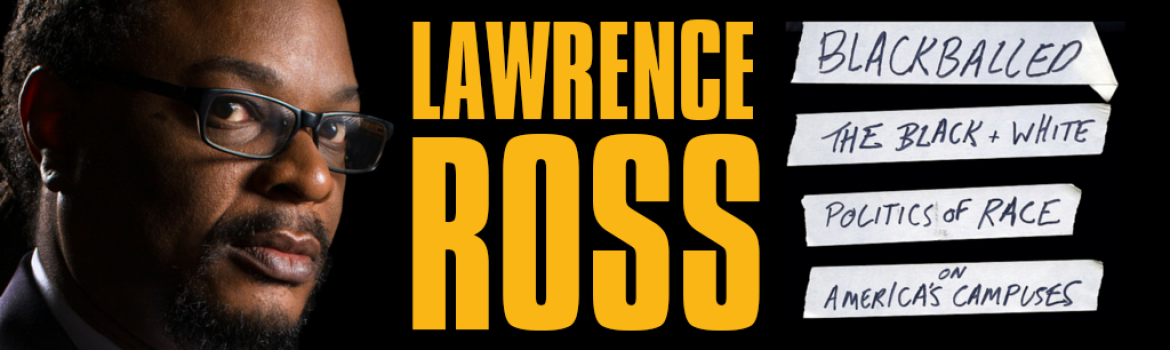
Last Saturday, Lawrence Ross gave a lecture on his new book: Blackballed: The Black and White Politics of Race on America’s Campuses. Due to crummy weather, and early onset Saturday night fever, the audience wasn’t as sizable as it should’ve been, but if you missed it, Blognonian has you covered.Ross began by singing the disgusting chant which was taught by two brothers at SAE’s chapter at the University of Oklahoma at fraternity events, and made its way around the internet in 2015. He continued by breaking down three ways in which school administrations, and the media strategically shift the conversation in these sorts of situations from racism on campus and dismiss the concerns of POC students.
- Individualize the incident – i.e. It only happened in this one chapter, with these two members. It’s not a systemic problem.
- Minimize the situation – "Despite what you have seen, and heard, this institution does not have a racism problem."
- Trivialize – Throw out an explanation for why this happened which distracts everyone from the real issues at hand.
For example, after the SAE Oklahoma incident, our beloved Waka Flocka Flame decided to cancel his upcoming concert at their campus. The man who hosts “Morning Joe” blamed Waka for the behavior of the two young, white men on national television, because clearly they had been listening to his music too much . . . Ross added in his own commentary, “Now, I can blame Waka Flocka for a lot of things, but I cannot blame him for systematic racism.”After his introduction to the meat of the lecture, Lawrence Ross introduced himself. He has written six books, and has a longstanding career in journalism. Notably, his first book was the critically acclaimed The Divine Nine: The History of African American Fraternities and Sororities. The fraternity Ross was a member of in college, Alpha Phi Alpha, started a chapter at Brown only a couple of years ago.After dong a brief overview of what structural racism is (for more information, see here), Ross detailed the four major areas that he identifies as continuing to bolster white supremacy on American campuses.
- Segregation and Anti-Affirmative Action – White supremacy's “biggest kryptonite” is African Americans, and other POC getting a higher education. When students of color were finally allowed to matriculate into predominantly white institutions, they were always kept in small enough numbers as “to not disrupt” the status quo. When these students finally amassed enough on campuses to demand a space for themselves, affirmative action laws started to materialize.Affirmative action refers to admission policies that provide equal access to education for those groups that have been historically excluded or underrepresented, such as women and minorities. Although people have tried to represent affirmative action policies through the lens of reverse racism, schools in America are still overwhelmingly separate but not equal. Black and Latino students are more likely to attend poorly funded schools, and Black students are four times as likely as white students to attend a school with uncertified teachers (Latinos twice as likely). The uneven playing field still exists for minorities, and for some the school to prison pipeline starts as early as suspensions in kindergarten.
- Campus Symbolism – How is a student of color supposed to feel about residing on a campus that is drenched in symbolism and recognition for openly racist historical figures? As someone pointed out in the Q&A, it is important for schools to recognize their racist heritage, in order to go about rectifying their position on social justice issues. Maintenance of a dedication to a person’s achievements needs to be weighed against any abhorrent practices that they preached.
- IFC Fraternities and Panhellenic Sororities – Frats and sororities have a long and racist history. Even though it can be uncomfortable, it is extremely important to educate yourself, and acknowledge that history, so that the future can be different. Every time you see pictures of Greek row events involving the celebration of the Antebellum South, a party is themed “Gangsta" or flat out “Mexican,” think about the long and brutal history of oppression that these ‘traditions’ are building on.
- Racial Micro-aggressions – or as Ross likes to refer to it, “The four year plan to drive black students completely crazy.” There are two sociological categories for interpreting race: race averse, and race aware. White people tend to be race averse: because they don't have to think about the color of their skin every day, they project that onto the rest of society, and often prescribe to colorblind ideology. POC tend to be race aware: for example, a black person does not have the privilege to ‘forget’ or ‘not think about’ the color of their skin, and thus they can’t view the world through the rose-colored glasses of make-believe equality. While white students tend to over-estimate the amount of diversity on their college campuses, a black student would know they make up exactly 9% of the population, and they probably know close to all of that population. Ross used pictures like those below to illustrate the two categories, and it really drove the point home.
[gallery columns="2" size="medium" link="file" ids="312,313"]If you are someone who is not a fan of being "PC", consider this Washington Post comic that Ross displayed. In the final portion of his lecture, Ross asked, how can you stop campus racism?
- It's important to understand that participating in racial justice "does not require melanin in your skin."
- Stop doing racist things. At this point, you know what you're doing when you put on blackface. If you see someone you know doing it, speak up.
- Don't be superficial. Proximity and/or congeniality to people of color does not give you a pass on racist behavior. Or, as Ross puts it, "We don't give a damn about your black best friend." Universal love is great, but do not use it as an excuse to ignore systemic problems.
- Stop being obsessed with statues of old white guys. At one point, Ross said, "Americans take down statues all of the time, just not in our own countries!"
- Don't be afraid to be stupid on the journey to racial justice. If you humble yourself, and empathize with other people, you can "bridge the gap between sincere ignorance and learning."
If you are craving any more information, or want to hear this stuff from a man who actually knows what he is talking about, absolutely buy this book. Lawrence Ross was a joy to have on campus, and the importance of his body of work cannot be stressed enough.Images via, via, via, via. (Last two images courtesy of Lawrence Ross' lecture slides).